2-Stroke 250HP Outboard Engine Parts
(1 products)This page is for Yamaha 2-Stroke 250HP outboard engines. Use it to find compatible parts and practical service information. Below you’ll find maintenance tips, common replacement parts, and troubleshooting guidance. You can also browse our main Yamaha collection. To start browsing parts for this engine, scroll to the bottom of the page; on the collection page, use the Filter & Sort controls to narrow by horsepower, year range, and part category/section.
Browse All Yamaha PartsHow to Identify Your 250HP Model
- Locate the nameplate/serial tag on the transom bracket or swivel bracket. It lists the model code, serial number, and often shaft length.
- Model codes and suffixes typically indicate features such as shaft length (e.g., L/XL), control type (remote), and production year. The paint/decals may also reference the fuel system (carb/EFI/HPDI for 2‑Stroke).
- Yamaha 250HP 2‑Stroke engines are V6 platforms. HPDI models have high‑pressure fuel components and specific filters, while carb/EFI versions (e.g., OX66 EFI) use a lower‑pressure fuel system.
- Confirm whether your engine uses oil injection (remote oil tank and under‑cowling reservoir) or premix. Many 250HP 2‑Strokes are oil‑injected from the factory.
Platform Overview
V6 Carb/EFI (2‑Stroke)
| Feature | Description |
|---|---|
| Configuration | 60° V6, loop‑charged 2‑Stroke with carburetors or EFI (e.g., OX66 EFI) |
| Common Models | 250HP V6 2‑Stroke carb/EFI variants |
| Advantages | Strong mid‑range torque, robust construction, straightforward service procedures |
| Notes | Keep fuel filters fresh; service the water pump regularly; verify oil injection operation and bleed procedures after service |
V6 HPDI (High Pressure Direct Injection) 2‑Stroke
| Feature | Description |
|---|---|
| Configuration | 60° V6 2‑Stroke with high‑pressure direct fuel injection (HPDI) |
| Common Models | 250HP V6 HPDI variants |
| Advantages | Improved fuel economy and emissions vs. carb/EFI; strong performance |
| Notes | Additional high‑pressure filters and VST service requirements; use fresh, water‑free fuel and follow filter intervals closely |
Routine Maintenance & Service Parts
Intervals below are general guidelines for 2‑Stroke outboards; always follow the official service manual for your exact model and operating conditions.
| Item | Interval* | Remarks | Parts Link |
|---|---|---|---|
| Gear oil (lower unit) | Every 100 hours or annually | Inspect for metal or water; replace drain plug gaskets; pressure test if contamination is found | Yamaha Collection |
| Spark plugs | 100 hours or annually; sooner if fouling | Use correct heat range and gap; 2‑Strokes can foul from rich mix or low‑speed trolling | Spark Plugs |
| Fuel filter(s) | 100 hours or annually | Replace engine‑side and any under‑cowl/inline filters; drain water‑separating filter regularly | Fuel Filters |
| Water pump impeller/kit | Every 200 hours or 2 seasons (inspect annually) | Critical for cooling; replace sooner if weak telltale or overheat symptoms | Yamaha Water Pump Repair Kits |
| Anodes (internal and external) | Inspect every 50 hours; replace when 50% depleted | Match anode material to water type (salt, brackish, fresh) | Yamaha Anodes |
| Oil injection system (filters/lines/bleed) | Inspect each season; bleed after service | Verify remote/engine tank filters and check valves; ensure lines are soft‑seated and not brittle | Hoses |
| Thermostats and poppet valve | Inspect annually; replace as needed | Stuck thermostats affect warm‑up, idle quality, and smoke output | Yamaha Collection |
| Propeller and hub inspection | Each trip; remove/grease annually | Check for dings, line on shaft, and hub slip; grease splines to ease removal | Yamaha Propellers |
Frequently Used Parts Categories
- Routine Service Kits – Yamaha Service & Maintenance Kits
- Cooling System – Yamaha Water Pump Repair Kits
- Fuel System (Filters) – Fuel Filters
- Fuel System (Pumps) – Fuel Pumps
- Ignition / Electrical – Electrical Items
- Gearcase & Seals – Yamaha Lower Unit Seal Kits
- Propellers – Yamaha Propellers
- Corrosion Protection – Yamaha Anodes
Common Symptoms & Quick Checks
| Symptom | Check First | Related Parts |
|---|---|---|
| Weak telltale or overheat alarm | Clogged intake screens, kinked hose, worn impeller, stuck thermostat | Water pump kit, thermostat, intake screens, gaskets |
| Poor acceleration or power loss | Damaged prop or slipping hub, restricted fuel filters, water in fuel | Propeller/hub, fuel filters, spark plugs |
| Hard starting or rough idle | Primer bulb condition, air leaks in fuel lines, fouled plugs, low battery | Fuel pump, fuel hoses, spark plugs, electrical items |
| Excessive smoke (2‑Stroke) | Oil injection operation, stuck choke/enrichment, thermostat stuck open | Oil system filters/hoses, thermostats, spark plugs |
| Gearcase noise or metal in gear oil | Low gear oil, water intrusion, fishing line on prop shaft, worn seals | Lower unit seal kit, drain plug gaskets, gear oil |
FAQs
Are parts interchangeable between different years or platforms?
Some parts interchange across multiple years and platforms, but many items are model‑specific. Always confirm using your exact model code and serial number before ordering.
When should I replace the impeller?
As a rule of thumb, every 200 hours or two seasons, whichever comes first. Replace immediately if the telltale is weak, the engine overheats, or you ran the pump dry.
How often should gear oil be changed?
Change lower unit gear oil every 100 hours or annually. If you see milky oil or metal, address the issue and pressure test the gearcase before further use.
What information do you need to verify part compatibility?
Please provide the full model code, serial number, shaft length, and any visible tags on the powerhead or bracket. Photos of the nameplate and the part needing replacement are very helpful.
Ready to find parts? Browse our main Yamaha collection and use Filter & Sort to narrow by horsepower, year, and model.
Shop Yamaha PartsIf you’re unsure about your model, send us a clear photo of the nameplate and the part you need and we’ll help verify compatibility.
- Most relevant
- Best selling
- Alphabetically, A-Z
- Alphabetically, Z-A
- Price, low to high
- Price, high to low
- Date, old to new
- Date, new to old

SeaSierra
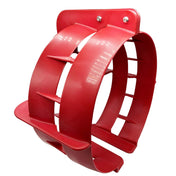
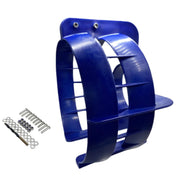
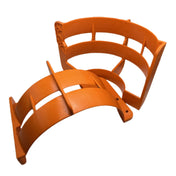
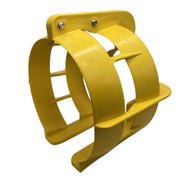
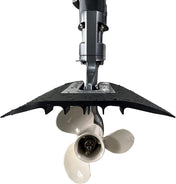
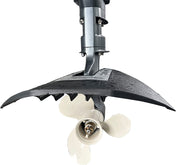
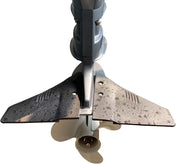
Whale Tail Hydrofoil Stabilizer for 40–300 HP Outboard Motors and Stern Drives
Regular price $64.89Unit price