EMP 15HP Marine Engine Parts
(0 products)This page focuses on 15 HP outboard engines and helps you find compatible EMP replacement parts and service information. Below you’ll find maintenance tips, common replacement parts, and troubleshooting guidance. You can also browse our main brand collections (Yamaha, Mercury, Johnson/Evinrude, Suzuki, Honda, Tohatsu). Scroll to the bottom to start browsing parts for this engine, and remember you can use the collection page’s Filter & Sort to narrow by horsepower, year range, and part category.
How to Identify Your 15 HP Model
- Locate the nameplate/serial tag on the transom bracket or swivel bracket; record the full model designation and serial number.
- Decode the suffix letters: common indicators include shaft length (S/M/L/XL), tiller vs. remote control, and market/year code.
- Determine stroke type: 2‑Stroke models typically have oil-mixing (premix or oil-injection), while 4‑Stroke models have an engine oil dipstick and overhead cam valve cover.
- Note platform clues: most 15 HP engines are twin‑cylinder. 4‑Stroke versions often use a timing belt and carburetor or EFI; older 2‑Stroke versions are usually carbureted.
Platform Overview
15 HP 2‑Stroke (Twin‑Cylinder, Carbureted)
| Feature | Description |
|---|---|
| Configuration | Inline‑2, carbureted 2‑Stroke with premix or oil‑injection |
| Common Models | Legacy 15 HP 2‑Stroke lines across multiple brands (e.g., earlier Johnson/Evinrude, Mercury/Mariner, Yamaha 15, Tohatsu/Nissan) |
| Advantages | Lightweight, simple maintenance, strong hole‑shot for size |
| Notes | Check fuel system (carb, lines, filter) and cooling system (impeller) regularly; confirm correct oil ratio if premixing. |
15 HP 4‑Stroke (Twin‑Cylinder, Carb/EFI)
| Feature | Description |
|---|---|
| Configuration | Inline‑2 4‑Stroke, overhead cam (timing belt), carburetor or EFI depending on year/brand |
| Common Models | Mercury/Mariner 15 4‑Stroke (incl. SeaPro), Yamaha F15, Suzuki DF15A, Honda BF15, Evinrude/Johnson 15 4‑Stroke (Tohatsu‑built), Tohatsu MFS15 |
| Advantages | Low fuel consumption, quieter operation, broad parts support |
| Notes | Service timing belt and valve train per manual; impeller and anodes are routine wear items; verify carb vs. EFI when ordering fuel components. |
Routine Maintenance & Service Parts
Intervals below are general guidelines for typical 15 HP usage. Always follow your engine’s official service manual and local operating conditions.
| Item | Interval* | Remarks | Parts Link |
|---|---|---|---|
| Engine oil + filter (4‑Stroke) | First 20 hrs, then every 100 hrs or annually | Use marine 4‑Stroke oil and correct filter grade; warm engine before draining | Oil Filters |
| Lower unit gear oil | Every 100 hrs or annually | Inspect for water intrusion/metal; replace drain plug gaskets as needed | Service & Maintenance Kits |
| Spark plugs | Every 100 hrs or annually (inspect at 50 hrs) | Check gap and replace if fouled or worn | Spark Plugs |
| Fuel filter / water separator | Inspect every 50 hrs; replace 100 hrs or annually | Replace inline filter; drain/replace separator element where fitted | Fuel Filters |
| Water pump impeller/kit | Every 2–3 seasons (sooner in sandy/silty water) | Key cooling wear item; replace more often if stream weakens | Water Pump Impeller Rebuild Kits |
| Anodes (zinc/aluminum/magnesium) | Inspect every 50 hrs; replace when 50% consumed | Match anode material to water type (salt/brackish/fresh) | Anodes |
| Timing belt (4‑Stroke OHC) | Inspect annually; replace per manual (often 3–5 years) | Check belt condition/tension; replace if cracked, glazed, or noisy | Belts |
| 2‑Stroke oiling (mix or injection) | Each outing; inspect seasonally | Verify correct premix ratio or inspect injection pump/lines and tank | Hoses |
Frequently Used Parts Categories
- Cooling System: Water Pump Impeller Rebuild Kits
- Fuel System: Fuel Filters · Fuel Pumps
- Ignition / Electrical: Starters · Ignition Switches
- Routine Service: Service & Maintenance Kits · Oil Filters
- Corrosion Protection: Anodes
- Lower Unit: Lower Unit Seal Kits
- Ignition Tune‑Up: Spark Plugs
Common Symptoms & Quick Checks
| Symptom | Check First | Related Parts |
|---|---|---|
| Weak tell‑tale stream or overheat alarm | Inspect intake screens, thermostat, and impeller housing for wear/debris | Water pump kit, intake screen, thermostat, anodes |
| Hard starting or rough idle | Check spark plug condition/gap; verify clean fuel and filter; for carb models, inspect idle circuit | Spark plugs, fuel filter, fuel pump, hoses |
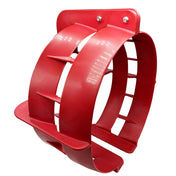
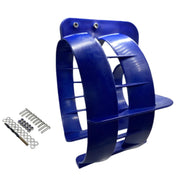
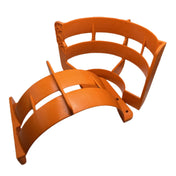
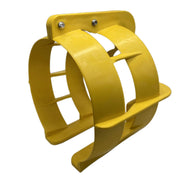
| Poor acceleration / power loss | Confirm prop condition/pitch, fuel delivery, and compression; on 4‑Stroke, assess valve/timing belt condition | Fuel filter, fuel pump, spark plugs, belt, anodes (drag), propeller guard/accessories |
| Excessive smoke (2‑Stroke) | Verify correct premix ratio or oil‑injection calibration; check plugs for fouling | Spark plugs, hoses, fuel filter |
| Gearcase noise or metal in gear oil | Change gear oil; inspect seals and prop shaft for fishing line damage | Lower unit seal kit, service kit, propeller guard |
FAQs
Are parts interchangeable between different years or platforms?
Not always. 2‑Stroke and 4‑Stroke components differ, and changes across years (carb vs. EFI, ignition updates, mid‑section revisions) affect parts. Confirm by model code and serial.
When should the impeller be replaced?
Inspect annually and replace every 2–3 seasons, or sooner if water flow weakens, you run sandy/silty water, or overheat symptoms appear.
How often should gear oil be changed?
Typically every 100 hours or annually. If the drained oil looks milky or metallic, address seal or gear issues before further use.
What information do you need to confirm compatibility?
Provide the full model designation, serial number, stroke type (2‑/4‑Stroke), year or approximate range, and any distinguishing features (carb vs. EFI, tiller vs. remote).
Ready to find parts by horsepower, year, and model? Start with our brand collections and filter down to your exact 15 HP outboard.
If you’re unsure about your model, send us a photo of the nameplate and the part you need and we’ll help verify compatibility.
- Most relevant
- Best selling
- Alphabetically, A-Z
- Alphabetically, Z-A
- Price, low to high
- Price, high to low
- Date, old to new
- Date, new to old
No products found