Force 2-Stroke 30-40HP Outboard Marine Engine Parts
(1 products)Parts and service guidance for Force 2‑Stroke 30–40HP outboard engines. This page helps you find compatible parts, routine maintenance items, and quick troubleshooting tips. You can also browse the main Force collection for more options. Scroll to the bottom to start browsing parts for this engine, and on the collection page use the Filter & Sort controls to narrow by horsepower, year range, and part category.
Browse All Force PartsHow to Identify Your 30–40HP Model
- Find the nameplate/serial tag on the transom bracket or swivel bracket. Record the full model designation and serial number.
- Model codes and suffixes often indicate shaft length (S/L/XL), starting and control type (manual/electric; tiller/remote), and production year. Compare the exact suffix when selecting parts.
- These engines are 2‑stroke, carbureted designs. Across years, both inline‑2 and (on some later 40HP) inline‑3 variants exist—confirm cylinder count and gearcase style before ordering internal components.
- If your motor was serviced with Mercury/Mariner‑era Force components, many wear parts (impellers, anodes, gearcase seals) cross over—use your serial/model tag to verify.
Platform Overview
Inline‑2 Carbureted 2‑Stroke (most 30–35HP and many 40HP)
| Feature | Description |
|---|---|
| Configuration | Inline‑2, carbureted 2‑stroke with premix or oil‑injection (depending on year). |
| Common Models | 30HP/35HP/40HP 2‑Stroke models from the late 1980s–1990s. |
| Advantages | Lightweight, simple service procedures, good low‑to‑mid range torque. |
| Notes | Water pump kits, anodes, and lower unit seals often align with Force/Mercury shared parts families—always match by serial/model. |
Inline‑3 Carbureted 2‑Stroke (select 40HP years)
| Feature | Description |
|---|---|
| Configuration | Inline‑3, carbureted 2‑stroke used in some later 40HP production. |
| Common Models | 40HP 2‑Stroke variants (Mercury‑supported Force era). |
| Advantages | Smoother running at certain RPM and broader power band. |
| Notes | Some ignition/fuel and gearcase parts differ from the 2‑cyl platform—verify by serial and cylinder count. |
Routine Maintenance & Service Parts
Intervals below are general guidelines for 2‑stroke outboards; always follow the official service manual for your exact model and usage.
| Item | Interval* | Remarks | Parts Link |
|---|---|---|---|
| Gear oil (lower unit) | Every 100 hours or annually | Replace drain/vent seals; check for water intrusion and metal debris. | Force Lower Unit Seal Kits |
| Spark plugs | Inspect every 50 hours; replace as needed | Use the correct heat range and gap; 2‑stroke operation can foul plugs quickly if mixture is rich. | Spark Plugs |
| Fuel filter / inline filter | Every 100 hours or annually | Replace more often if using ethanol‑blended fuel or after long storage. | Fuel Filters |
| Water pump impeller / kit | Every 2–3 seasons or sooner if flow weakens | Critical for cooling; replace impeller and inspect wear plate/housing. | Force Water Pump Repair Kits |
| Anodes (internal & external) | Inspect each season; replace when 50% eroded | Use correct alloy for your waters (fresh, brackish, salt) to protect aluminum. | Anodes |
| Oil‑injection filter/lines (if equipped) | Inspect each season | Confirm flow and line condition; premix engines should follow the specified fuel/oil ratio. | Oil & Fuel Hoses |
*Follow the schedule in your official service manual for your serial range and operating environment.
Frequently Used Parts Categories
- Routine Service: Force Water Pump Repair Kits
- Lower Unit / Sealing: Force Lower Unit Seal Kits
- Fuel System: Fuel Filters
- Ignition & Electrical: Electrical Items
- Corrosion Protection: Anodes
- Propulsion: Propellers
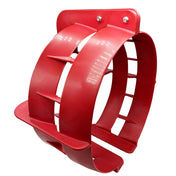
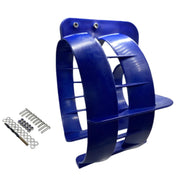
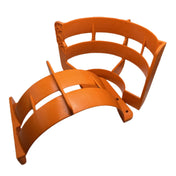
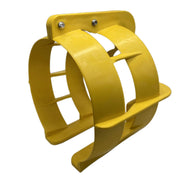
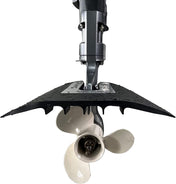
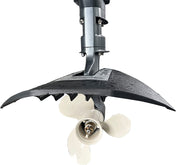
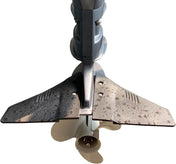
- Performance & Trim: Outboard Hydrofoil Stabilizers
Common Symptoms & Quick Checks
| Symptom | Check First | Related Parts |
|---|---|---|
| Weak tell‑tale stream or overheat alarm | Inspect intake screen for debris; evaluate impeller age; confirm thermostat operation. | Water pump kit, intake screen, thermostat, gaskets |
| Poor acceleration / power loss | Check spark plug condition and gap; confirm fuel quality; inspect inline filter and lines; verify throttle and choke linkage. | Spark plugs, fuel filter, fuel/oil hoses, carb service parts |
| Hard starting / rough idle | Verify cold‑start enrichment, look for air leaks at fuel lines, check compression and ignition. | Fuel hoses, primer bulb, ignition components, carb gaskets |
| Excessive smoke (2‑stroke) | Confirm correct premix ratio or proper oil‑injection calibration; check for stuck choke. | Spark plugs, carb components, oil‑injection lines/filters |
| Gearcase noise / metallic sheen in gear oil | Drain and inspect oil; look for water intrusion; check prop shaft seal and shift shaft seal areas. | Lower unit seal kit, seals & O‑rings, gear lube |
FAQs
Are parts interchangeable between different years or platforms?
Many wear items (impellers, anodes, basic seals) are shared across multiple Force 30–40HP variants, especially in the Mercury‑supported years. Internal components like ignition, carbs, and gearcase details can differ. Always confirm by full model and serial.
When should I replace the water pump impeller?
As a rule of thumb, every 2–3 seasons—or immediately if the tell‑tale weakens, you overheat, or the engine sat for a long period. Inspect the wear plate and housing whenever the lower unit is down.
How often should I change lower unit gear oil?
At least annually or every 100 hours. If the boat sees heavy use or debris‑prone shallows, service more frequently and always check for water contamination.
What info do you need to confirm part compatibility?
Please provide the full model designation, serial number, horsepower, approximate year, cylinder count (2 or 3), and any notable features (manual/electric start, tiller/remote). Photos of the nameplate help.
Ready to find parts by horsepower, year, and model? Browse the Force collection and use the filters to narrow results.
Shop Force Outboard PartsIf you’re unsure about your model, send us a photo of the nameplate and the part you need and we’ll help verify compatibility.
- Most relevant
- Best selling
- Alphabetically, A-Z
- Alphabetically, Z-A
- Price, low to high
- Price, high to low
- Date, old to new
- Date, new to old

SeaSierra
130°F Thermostat for Mercury/Mariner and Chrysler/Force Outboards – Replaces 895338, F97068-2
Regular price $24.20Unit price