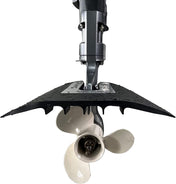
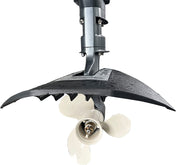
Mercury 2-Stroke 75-275HP Outboard Engine Parts
(0 products)This page is dedicated to Mercury 2-Stroke 75–275HP outboard engines. Use it to find compatible parts and key service information, including maintenance tips, commonly replaced items, and troubleshooting guidance. You can also browse the main Mercury collection for a wider selection. Scroll to the bottom of this page to start browsing parts for this engine, and on the collection page use the Filter & Sort controls to narrow by horsepower, year range, and part category/section.
How to Identify Your 75–275HP Model
- Serial plate location: typically on the swivel bracket (port or starboard). The plate/sticker shows the serial number; nearby documentation may note the model year.
- Reading the model/serial: suffixes may indicate shaft length (e.g., S/L/XL), starting/controls (manual/electric, tiller/remote), and market options.
- Platform clues: 75HP units are commonly inline-3 (carbureted or DFI Optimax), while 135–275HP models are V6 2‑stroke (carb/EFI or DFI Optimax). Cowling decals like “Optimax” or “EFI” help distinguish systems.
- Oil system: many 2‑stroke models use oil injection; earlier or race variants may require premix. Confirm your exact system before servicing.
Platform Overview
Inline-3 2‑Stroke (75HP class)
| Feature | Description |
|---|---|
| Configuration | Inline‑3 2‑stroke; carbureted or DFI Optimax fuel system (approx. 1.5L). |
| Common Models | 75HP 2‑Stroke carb; 75HP DFI Optimax variants. |
| Advantages | Light weight, simple maintenance, good mid‑range torque for fishing and general use. |
| Notes | Impeller and gearcase service are routine; DFI models add high‑pressure fuel/air components—use the correct filters and procedures. |
V6 2‑Stroke (135–200HP)
| Feature | Description |
|---|---|
| Configuration | V6 2‑stroke; carbureted or EFI fuel systems (commonly 2.0/2.4/2.5L families). |
| Common Models | 135HP–200HP carb/EFI outboards across multiple year ranges. |
| Advantages | Strong all‑around performance and parts availability; proven platforms. |
| Notes | Lower unit style affects seal kit and prop fit. Follow correct plug heat range and timing specs per serial range. |
V6 2‑Stroke (225–275HP, EFI/DFI Optimax)
| Feature | Description |
|---|---|
| Configuration | High‑output V6 2‑stroke; EFI or DFI Optimax (commonly 3.0L class). |
| Common Models | 225HP–275HP EFI and Optimax models used on bays, offshore, and performance rigs. |
| Advantages | High torque and top‑end power with efficient DFI variants. |
| Notes | Cooling and anode maintenance are critical in saltwater. Use the correct water pump kit and thermostat temperature for your serial range. |
Routine Maintenance & Service Parts
Intervals below are general guidelines for Mercury 2‑stroke outboards. Always follow the official service manual for your exact serial range and operating environment.
| Item | Interval* | Remarks | Parts Link |
|---|---|---|---|
| Gear oil (lower unit) | Every 100 hrs or annually | Inspect for water intrusion/metal. Replace seals if contamination is found. | Mercury Lower Unit Seal Kits |
| Spark plugs | Inspect 50–100 hrs; replace as needed | Use specified heat range and gap. DFI/EFI may have unique specs. | Spark Plugs |
| Fuel filter / inline filter | Every 100 hrs or annually | Replace more often with ethanol fuel or dirty tanks. DFI systems are sensitive to restrictions. | Fuel Filters |
| Water pump impeller / kit | Every 2–3 seasons or 200 hrs | Replace sooner if weak tell‑tale, overheat alarms, or sand/silt use. | Mercury Water Pump Repair Kits |
| Anodes (internal & external) | Inspect often; replace at ~50% loss | Use correct alloy for fresh, brackish, or saltwater. Keeps corrosion in check. | Anodes |
| Oil‑injection reservoir/strainer & lines | Inspect annually | Check for cracked hoses, clean the strainer, verify pump output; premix if injection is disabled. | Hoses |
| Thermostats & poppet valve | Every 2 seasons | Stuck thermostats cause cold‑seize or overheat. Replace with correct temp spec. | Cooling Components |
*Intervals vary by model, duty cycle, and water conditions.
Frequently Used Parts Categories
- Cooling System: Mercury Water Pump Repair Kits
- Lower Unit Service: Mercury Lower Unit Seal Kits
- Fuel System: Fuel Filters and Fuel Pumps
- Ignition & Electrical: Spark Plugs, Starters, Sensors
- Propulsion: Propellers
- Corrosion Protection: Anodes
- All Mercury Categories: Mercury Outboard Parts
Common Symptoms & Quick Checks
| Symptom | Check First | Related Parts |
|---|---|---|
| Weak tell‑tale / overheat alarm | Inspect intake screens, water pump impeller, and thermostats; verify hose kinks. | Water pump kit, thermostat(s), intake screens, poppet valve. |
| Poor acceleration / power loss | Check spark quality, plug condition, fuel filter restriction, and fuel quality; verify throttle synchronization. | Spark plugs, coils/wires, fuel filter, fuel pump diaphragm, reed valves. |
| Hard starting / rough idle | Verify enrichment/choke operation, look for air leaks in fuel lines, and clean idle circuits (carb) or check DFI/EFI pressures. | Fuel lines/hoses, primer bulb, carb kits, injectors/filters, TPS/IAT sensors. |
| Excessive smoke (2‑stroke) | Confirm correct oil type and ratio; inspect oil‑injection settings and stuck thermostat causing cold running. | Thermostat, oil‑injection lines/strainer, spark plugs. |
| Gearcase noise / metal in gear oil | Check prop shaft for fishing line, inspect seals, and measure backlash; refresh gear oil. | Lower unit seal kit, shims/bearings, prop shaft seals. |
FAQs
Are parts interchangeable across different years or platforms?
Some service parts interchange within a platform, but changes in fuel system, ignition, and gearcase design between years can affect fit. Verify by serial number and compare component families before ordering.
When should I replace the impeller?
As a preventive measure every 2–3 seasons (around 200 hours), or immediately if the tell‑tale weakens, the engine overheats, or you operate in sandy/silty water.
How often should I change lower unit gear oil?
At least annually or every 100 hours. If the oil looks milky or metallic, service the seals and investigate bearing wear before further use.
What information do you need to confirm part compatibility?
Provide the engine’s serial number, horsepower, fuel system type (carb, EFI, DFI Optimax), shaft length if known, and the specific component or assembly you are servicing.
Ready to find parts? Browse the main Mercury outboard collection and use Filter & Sort to narrow by horsepower, year range, and part category.
If you’re unsure about your model, send us a photo of the nameplate and the part you need and we’ll help verify compatibility.
- Most relevant
- Best selling
- Alphabetically, A-Z
- Alphabetically, Z-A
- Price, low to high
- Price, high to low
- Date, old to new
- Date, new to old
No products found