Mercury 2-Stroke 9.9-40HP Outboard Marine Engine Parts
(1 products)This page is for Mercury 2‑Stroke 9.9–40HP outboard engines. Use it to find compatible parts and practical service information, including maintenance tips, common replacement items, and troubleshooting guidance. You can also browse the main Mercury collection for a wider parts selection. Scroll to the bottom of this page to start browsing parts for this engine, and on the collection page use the Filter & Sort controls to narrow results by horsepower, year range, and part category.
How to Identify Your 9.9–40HP Model
- Find the serial/nameplate on the transom bracket (starboard side) or on the swivel bracket under the cowl. A secondary label may be on the powerhead cover.
- Model codes and suffixes can indicate shaft length (short/long), starting and control type (manual/electric; tiller/remote), and market year. Record the full code plus serial number for parts matching.
- 2‑Stroke variants: 9.9–30HP are typically inline‑2 twins. 40HP exists in several platforms by era: inline‑2 twin, inline‑3 (shared family with 50/60HP), and older inline‑4 “Classic” versions. Count cylinders/plug leads and note carburetor count to help identify your platform.
- Fueling: early models use 50:1 pre‑mix; many later units use oil‑injection (remote tank and feed lines). Verify your system before ordering fuel and oil components.
Platform Overview
Portable Twins (9.9–15HP)
| Feature | Description |
|---|---|
| Configuration | Inline‑2, carbureted 2‑Stroke, manual or electric start |
| Common Models | 9.9HP and 15HP 2‑Stroke models (tiller or remote) |
| Advantages | Light weight, simple maintenance, easy portability |
| Notes | Typically 50:1 pre‑mix; compact gearcase uses small impeller kits—verify by serial before ordering. |
Midrange Twins (20–30HP)
| Feature | Description |
|---|---|
| Configuration | Inline‑2, carbureted 2‑Stroke; manual/electric start; tiller or remote |
| Common Models | 20HP, 25HP, 30HP 2‑Stroke variants |
| Advantages | Good torque for small skiffs and tenders; straightforward service |
| Notes | Some later units have oil‑injection. Cooling system parts (impeller/thermostat) and ignition items are common maintenance needs. |
40HP Platforms (by era)
| Feature | Description |
|---|---|
| Configuration | Varies by year: inline‑2 twin; inline‑3 (shared block with 50/60HP); or older inline‑4 “Classic” 2‑Stroke, all carbureted |
| Common Models | 40HP 2‑Stroke models across multiple generations; some share components with 25–30HP (twins) or 50/60HP (3‑cyl family) |
| Advantages | Strong low‑to‑midrange torque; broad parts availability |
| Notes | Thermostats often spec around 122°F or 130°F depending on sub‑model; water pump kits and carb parts differ between twin/3‑cyl/4‑cyl—confirm by serial and cylinder count. |
Routine Maintenance & Service Parts
Service intervals below are general guidelines; always follow the official Mercury service manual for your exact model and operating conditions.
| Item | Interval* | Remarks | Parts Link |
|---|---|---|---|
| Gear oil (lower unit) | Every 100 hours or annually | Drain, inspect for water/metal; replace seals if contamination is present. | Mercury Lower Unit Seal Kits |
| Spark plugs | Every 100 hours or annually | Verify correct heat range and gap for your platform; replace if fouled. | Spark Plugs |
| Fuel filter / in‑line filter | 50–100 hours (inspect each trip) | Replace at first sign of restriction or debris; keep water out of fuel. | Fuel Filters |
| Water pump impeller / kit | Every 100 hours or 1–2 seasons | Essential for cooling; replace sooner if weak tell‑tale or overheat alarms occur. | Mercury Water Pump Repair Kits |
| Thermostat | Inspect annually; replace every 2–3 seasons | Many 2‑Stroke models use ~122°F or ~130°F stats—confirm by serial. | Mercury Outboard Parts |
| Anodes (zincs) | Inspect every 50 hours; replace when 50% depleted | Use correct alloy for your water (salt, brackish, fresh) to protect the gearcase and powerhead. | Anodes |
| 2‑Stroke oil system | Every outing / seasonal | Pre‑mix 50:1 (if applicable) with TC‑W3 ashless oil; for oil‑injection, inspect remote tank, strainer, and lines. | Mercury Outboard Parts |
| Propeller & hardware | Seasonally or after strikes | Remove prop, check for line on shaft, grease splines, inspect thrust washer and nut. | Propellers |
Frequently Used Parts Categories
- Routine Service: Service & Maintenance Kits
- Cooling System: Mercury Water Pump Repair Kits
- Gearcase & Seals: Mercury Lower Unit Seal Kits
- Fuel System: Fuel Filters and Fuel Pumps
- Ignition / Electrical: Electrical Items
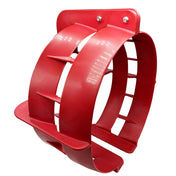
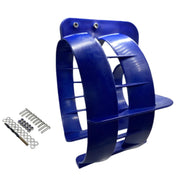
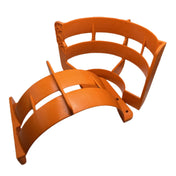
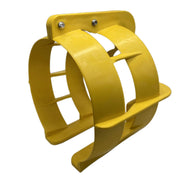
- Propulsion & Protection: Propellers and Propeller Guards
- Corrosion Protection: Anodes
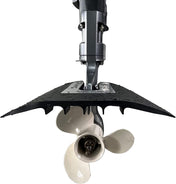
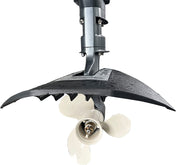
- Boat Handling & Accessories: Outboard Hydrofoil Stabilizers and Boat Accessories
Common Symptoms & Quick Checks
| Symptom | Check First | Related Parts |
|---|---|---|
| Weak tell‑tale or overheat alarm | Inspect intake screens for blockage; verify impeller condition; test thermostat operation. | Water pump kit, thermostat, intake screen |
| Hard starting / rough idle | Prime bulb and check for soft bulb; inspect fuel filter; clean carb jets; verify spark plug condition and gap. | Fuel filter, primer bulb/fuel pump, carburetor service parts, spark plugs |
| Poor acceleration / power loss | Check for fouled plugs; verify timing and throttle linkage sync; ensure proper prop pitch and undamaged blades. | Spark plugs, ignition/electrical items, propeller |
| Excessive smoke (2‑Stroke) | Confirm correct oil ratio (pre‑mix 50:1 unless specified otherwise); verify choke isn’t stuck closed; check thermostat if engine runs too cool. | 2‑Stroke oil system components, choke linkage/solenoid, thermostat |
| Gearcase noise / metal in oil | Drain and inspect gear oil; look for water intrusion; check seals and prop shaft for fishing line damage. | Lower unit seal kit, bearings, thrust washer/prop hardware |
FAQs
Are parts interchangeable between different years or platforms?
Some items are shared (anodes, many fasteners, universal fuel filters), but cooling, carburetor, ignition, and gearcase parts vary by platform (twin vs 3‑cyl vs 4‑cyl) and year. Always confirm by serial number and cylinder count before ordering.
When should the water pump impeller be replaced?
As a rule, every 100 hours or 1–2 seasons. Replace sooner if the tell‑tale weakens, the engine overheats, or the impeller shows set‑memory or cracked vanes.
How often should I change the gear oil?
At least annually or every 100 hours. Inspect the oil for milky color (water) or metal debris; address leaks promptly with a seal kit.
What information do you need to verify part compatibility?
Provide the full serial number, model designation, cylinder count, shaft length, and whether the engine uses pre‑mix or oil‑injection. Photos of the nameplate and the part needing replacement help ensure a precise match.
Ready to find parts? Browse the main Mercury collection and use Filter & Sort to narrow by horsepower, year, and model.
If you’re unsure about your model, send us a photo of the nameplate and the part you need and we’ll help verify compatibility.
- Most relevant
- Best selling
- Alphabetically, A-Z
- Alphabetically, Z-A
- Price, low to high
- Price, high to low
- Date, old to new
- Date, new to old

SeaSierra
Inline Fuel Filter – Yamaha/Mercury Mariner F15–F40 4-Stroke & Evinrude E-TEC 15–30 HP 2-Stroke
Regular price $20.08Unit price