Mercury 2-Stroke Outboard Engine Parts 40-300HP
(5 products)Model guide and parts hub for Mercury 2‑Stroke 40–300HP outboard engines. Use this page to find compatible categories, routine maintenance recommendations, and troubleshooting tips. You can also browse our main Mercury collection, and at the bottom of this page start browsing parts for your engine. On the collection page, use the Filter & Sort controls to narrow results by horsepower, year range, and part category.
Browse All Mercury PartsHow to Identify Your 40–300HP Model
- Locate the serial/nameplate on the transom bracket or swivel bracket. Record the full serial number and any model suffix (e.g., ELPT).
- Decode common suffixes: E = Electric start, L/XL = 20/25 in shaft, P/T = Power Trim, T = Tiller; combinations like ELPT indicate Electric start, Long shaft, Power Trim.
- Distinguish platforms: earlier 40HP models may be 2‑cyl twin or inline‑4 “Classic 40,” mid‑’90s and newer 40/50/60 are often inline‑3; larger 135–300HP are V6 (carb/EFI or Optimax DFI).
- Oil system: verify premix (typically 50:1) vs. oil‑injection. If equipped, note the remote oil tank and hoses when ordering service parts.
Platform Overview
40HP “Classic” Families (Twin & Inline‑4, carbureted)
| Feature | Description |
|---|---|
| Configuration | Carbureted 2‑Stroke; found as 2‑cyl “402” twin or inline‑4 “Classic 40.” Lightweight, simple ignition and fuel systems. |
| Common Models | Mercury 40HP 2‑cyl twin; Mercury 40HP inline‑4 “Classic 40.” |
| Advantages | Simple to service; good parts availability for tune‑up and cooling system. |
| Notes | Verify cylinder count when ordering ignition, carburetor, and water‑pump parts. Many wear items overlap with 40/50/60 families, but not all. |
40/50/60HP Inline‑3 (59 cu in) carbureted
| Feature | Description |
|---|---|
| Configuration | Inline‑3 carbureted 2‑Stroke, widely used on 40/50/60HP. Commonly referenced as the “59ci” block. |
| Common Models | Mercury 40/50/60HP 2‑Stroke inline‑3 (various carb families). |
| Advantages | Strong mid‑range torque and broad parts coverage; popular on mid‑’90s and newer two‑strokes. |
| Notes | Cooling and gearcase service is similar across 40/50/60 variants; verify carb style and linkage parts by serial. |
Mid‑Range Inline (75–125HP)
| Feature | Description |
|---|---|
| Configuration | Inline‑3 (75–90) and inline‑4 (90–125) 2‑Stroke, carb or early EFI depending on year/serial. |
| Common Models | 75/90 inline‑3; 90/115/125 inline‑4 2‑Stroke. |
| Advantages | Widely supported; robust gearcases; straightforward carb/ignition service. |
| Notes | Confirm cylinder count and induction type (carb vs. EFI) when ordering ignition, fuel, and cooling parts. |
V6 135–300HP (Carb/EFI & Optimax DFI)
| Feature | Description |
|---|---|
| Configuration | V6 2‑Stroke in carb and EFI forms; Optimax DFI (air‑assisted direct injection) on many 135–300HP models. |
| Common Models | 135/150/175/200/225/250/300 2‑Stroke (carb, EFI, Optimax variants). |
| Advantages | High output with strong parts support; Optimax provides improved efficiency and emissions vs. carb/EFI. |
| Notes | Optimax uses DFI‑specific fuel/air components. Always confirm by serial when ordering injectors, compressors, and sensors. |
Routine Maintenance & Service Parts
Intervals below are general guidelines; always follow the official service manual for your specific serial number and model.
| Item | Interval* | Remarks | Parts Link |
|---|---|---|---|
| Lower unit gear oil | Every 100 hours or annually | Inspect for water intrusion (milky oil) and metal debris; replace seals if needed. | Mercury Collection |
| Spark plugs | 100 hours / season | Replace or clean and gap per spec; misfire and hard starting often trace to plugs. | Spark Plugs |
| Fuel filter / water separator | 100 hours / season | Keep spare filters onboard; ethanol fuel and debris are common issues. | Fuel Filters |
| Water pump impeller/kit | Every 2 seasons (or 100 hours in sandy/silty water) | Weak tell‑tale or overheat alarms often indicate impeller wear; renew full kit if housing is scored. | Mercury Water Pump Repair Kits |
| Anodes (sacrificial) | Inspect every 50 hours; replace when 50% consumed | Choose the correct alloy for fresh, brackish, or salt water to reduce corrosion. | Anodes |
| 2‑Stroke oil injection / premix | Check each season | Inspect injection hoses, strainer, and tank cap; if premix, confirm ratio (commonly 50:1) per manual. | Mercury Collection |
| Thermostat inspection | Every 2 years | Stuck‑open thermostats cause cold running and excess fuel use; stuck‑closed can overheat. | Mercury Collection |
Frequently Used Parts Categories
- Routine Service — Service & Maintenance Kits
- Cooling System — Mercury Water Pump Repair Kits
- Fuel System — Fuel Filters and Fuel Pumps
- Ignition / Electrical — Electrical Items
- Gearcase Sealing — Mercury Lower Unit Seal Kits
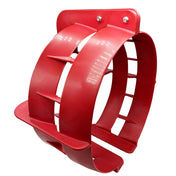
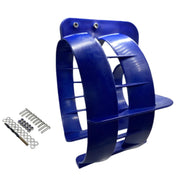
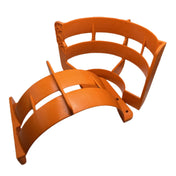
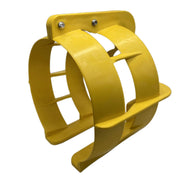
- Propulsion — Propellers and Propeller Guards
- Corrosion Protection — Anodes
Common Symptoms & Quick Checks
| Symptom | Check First | Related Parts |
|---|---|---|
| Weak tell‑tale or overheat alarm | Inspect intake screens for blockage; test water pump output; check thermostat for sticking. | Water pump kit, intake screen, thermostat, anodes |
| Poor acceleration / power loss | Verify fresh fuel and correct oil ratio; replace fuel filter; inspect spark plugs and plug wires. | Fuel filter, fuel pump, spark plugs, ignition components |
| Hard starting / rough idle | Squeeze primer bulb firm; confirm choke/enrichment operation; check for fouled plugs or carb varnish. | Spark plugs, carburetor service parts, fuel lines/bulb |
| Excessive smoke (2‑Stroke) | Confirm premix ratio or oil‑injection setting; check stuck choke and float height. | Carburetor parts, choke/solenoid components, oil system hoses |
| Gearcase noise / metal in gear oil | Drain and inspect oil; check prop shaft for fishing line; evaluate seals and bearings. | Lower unit seal kit, bearings, gear lube |
FAQs
Are parts interchangeable between different years or platforms?
Some wear items (impellers, anodes, basic ignition components) may cross over, but many fuel, ignition, and cooling parts are platform‑ and serial‑specific. Always confirm by serial number and configuration (twin, inline‑3/4, V6; carb, EFI, or Optimax DFI).
When should the impeller be replaced?
As a rule, replace the impeller every two seasons—sooner if you boat in sandy or silty water or see a weak tell‑tale. Consider a full water‑pump kit if the wear plate or housing is scored.
How often should gear oil be changed?
Change lower unit gear oil every 100 hours or annually. If the drained oil is milky (water intrusion) or contains metal, service seals and investigate bearing/gear wear before reuse.
What information do you need to confirm compatibility?
Provide the engine’s serial number, horsepower, shaft length, control type (tiller/remote), and whether it is carb, EFI, or Optimax. Photos of the nameplate and the part to be replaced help ensure a correct match.
Ready to find parts for your Mercury 2‑Stroke 40–300HP? Browse the main Mercury collection to filter by horsepower, year, and category.
Shop Mercury Outboard PartsIf you’re unsure about your model, send us a photo of the nameplate and the part you need and we’ll help verify compatibility.
- Most relevant
- Best selling
- Alphabetically, A-Z
- Alphabetically, Z-A
- Price, low to high
- Price, high to low
- Date, old to new
- Date, new to old

SeaSierra
4-Stroke Water Pump Service Kit for Honda BF75/BF90 AT and Early Mercury Gear Cases
Regular price $79.00Unit price
SeaSierra
Water Pump Impeller Repair Kit for Mercury/Mariner – Replaces 47-43026T06, 8M0100526
Regular price $41.50Unit price
SeaSierra
Water Pump Repair Kit Without Housing for Mercury/Mariner 40–300 HP – Replaces 47-43026Q06
Regular price $37.95Unit price
SeaSierra
Water Pump Impeller for Honda 70/90 HP and Mercury/Mariner 2-Stroke 60–225 HP & 4-Stroke 30–300 HP
Regular price $17.16Unit price
SeaSierra
Water Pump Impeller Kit with Housing – Mercury Marine Cross-Reference 47-43026T06, 8M0100526
Regular price $72.50Unit price