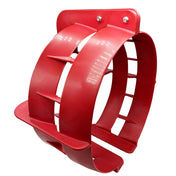
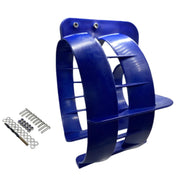
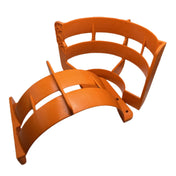
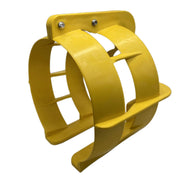
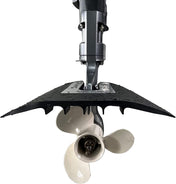
Mercury 2-Stroke Outboard Motor 90-120HP
(1 products)This page is for Mercury 2‑Stroke 90–120HP outboard engines. Use it to quickly find compatible parts and practical service information. Below you’ll find maintenance tips, common replacement parts, and troubleshooting guidance. You can also browse the main Mercury collection any time. Scroll to the bottom of this page to start browsing parts for this engine, and on the collection page use the “Filter & Sort” controls to narrow results by horsepower, year range, and part category.
How to Identify Your 90–120HP Model
- Find the serial number plate on the transom bracket (often starboard side) or swivel bracket. Note the full serial and any model descriptors.
- Mercury two‑strokes rely primarily on the serial number for parts lookup; suffixes may indicate shaft length, starting/charging equipment, or region.
- Platform clues: many 90HP two‑strokes are inline‑3, while 100–115HP are commonly inline‑4 “2+2” carbureted models. Inline‑4 motors typically lack a removable cylinder head casting.
- If your engine is labeled 120HP with a removable cylinder head, confirm whether it is a Force 120 sold under Mercury branding. If so, use Force Outboard Parts for best compatibility.
Platform Overview
Inline‑3 (approx. 90HP) 2‑Stroke
| Feature | Description |
|---|---|
| Configuration | Inline‑3, carbureted 2‑stroke outboard |
| Common Models | 90HP 2‑Stroke inline‑3 variants (mid‑1990s into 2000s in many markets) |
| Advantages | Compact, light weight, simple carburetion, good mid‑range torque |
| Notes | Routine parts (impellers, plugs, filters, anodes) are widely supported; confirm serial for ignition, carb, and gearcase specifics. |
Inline‑4 “2+2” (approx. 100–115HP) 2‑Stroke
| Feature | Description |
|---|---|
| Configuration | Inline‑4, carbureted 2‑stroke with “2+2” operation (two cylinders transition onto the main circuit as RPM rises) |
| Common Models | 100/115HP 2‑Stroke inline‑4 (same family also produced 125HP in many years) |
| Advantages | Strong mid‑range, straightforward service, broad parts availability |
| Notes | Verify serial for carburetor style and ignition (e.g., Thunderbolt/CDM). Many used a 2.07:1 gearcase; always confirm before ordering seals/gears. |
Note: Genuine Mercury‑branded 120HP two‑stroke models are uncommon; many 1990s “120” engines are Force 120 and use Force‑specific parts. When in doubt, compare the serial plate and consult Force Outboard Parts.
Routine Maintenance & Service Parts
Intervals below are general guidelines; always follow the service procedures and schedules in your official Mercury manual for your exact serial range.
| Item | Interval* | Remarks | Parts Link |
|---|---|---|---|
| Gear oil (lower unit) | Every 100 hrs or annually | Check for water/metal; reseal if contamination is found. | Mercury Lower Unit Seal Kits |
| Spark plugs | Inspect 50 hrs; replace 100 hrs | Use the correct heat range and gap; replace if fouled or worn. | Spark plug |
| Fuel filter / in‑line filter | Every 100 hrs or annually | Replace sooner for contaminated fuel or storage issues. | Fuel Filters |
| Water pump impeller / kit | Every 100 hrs or 1–2 seasons | Essential for cooling; replace sooner if telltale is weak or after sand/silt use. | Mercury Water Pump Repair Kits |
| Anodes | Inspect 50 hrs; replace when 50% depleted | Protects against corrosion; match water type (fresh/brackish/salt). | Anodes |
| Propeller & hardware | Inspect before trips; remove seasonally | Check for fishing line at the seals; verify hub integrity and cotter hardware. | Propellers |
| Oil‑injection system (if equipped) | Annually | Inspect/replace brittle hoses, filters and clamps; bleed per manual after service. | Hoses |
Frequently Used Parts Categories
- Routine Service: Mercury Outboard Parts
- Cooling System: Mercury Water Pump Repair Kits
- Fuel System: Fuel Filters and Carburetor
- Ignition / Electrical: Electrical Items
- Gearcase & Seals: Mercury Lower Unit Seal Kits
- Propellers & Hardware: Propellers
- Corrosion Protection & Accessories: Anodes and Boat Accessories
Common Symptoms & Quick Checks
| Symptom | Check First | Related Parts |
|---|---|---|
| Weak telltale or overheat alarm | Inspect intake screens, verify impeller condition, confirm thermostat operation. | Water pump kit, intake screen, thermostat, anodes |
| Poor acceleration / power loss | Check fuel quality, filters, carb cleanliness/sync; verify spark on all cylinders. | Fuel filter, carburetor kit, spark plugs, reeds |
| Hard starting / rough idle | Inspect primer bulb and lines for air leaks; check choke/enrichment and ignition timing. | Fuel lines/hoses, carburetor components, spark plugs |
| Excessive smoke (2‑Stroke) | Confirm correct oil ratio or oil‑injection operation; verify plug heat range. | Oil lines, spark plugs, fuel/oil filter |
| Gearcase noise or metal in gear oil | Drain and inspect oil; pressure/vacuum test the case; verify prop shaft seals. | Lower unit seal kit, bearings, prop hardware |
FAQs
Are parts interchangeable across 90–120HP Mercury two‑stroke models?
Some routine items overlap, but ignition, carburetion, and gearcase details vary by platform and serial range. Confirm the serial number and cylinder configuration (inline‑3 vs inline‑4) before ordering.
When should I replace the impeller?
As a rule, every 100 hours or 1–2 seasons, and sooner after sand/silt use or if the telltale weakens. A fresh impeller is inexpensive insurance against overheating.
How often should I change lower‑unit gear oil?
At least annually or every 100 hours. Inspect for water (milky oil) or metal. If contamination is found, service seals before returning to use.
I have a 120HP with a removable cylinder head—do I use Mercury or Force parts?
Many 1990s 120HP engines sold under the Mercury umbrella are Force 120 models. Match the serial plate; if it’s a Force, browse Force Outboard Parts for correct components.
Ready to find parts by horsepower, year, and model? Start in our main Mercury collection and use the Filter & Sort tools to narrow your results.
If you’re unsure about your model, send us a clear photo of the serial/nameplate and the part you need—we’ll help verify compatibility.
- Most relevant
- Best selling
- Alphabetically, A-Z
- Alphabetically, Z-A
- Price, low to high
- Price, high to low
- Date, old to new
- Date, new to old

SeaSierra
130°F Thermostat for Force Outboards and Mercury SportJet – Replaces F664068
Regular price $35.20Unit price