QuickMarine 40HP 4-Stroke Outboard Engine Parts
(1 products)This page focuses on QuickMarine 4‑Stroke 40HP outboard engines. Use it to find compatible replacement parts and key service information. Below you’ll find maintenance tips, frequently replaced components, and troubleshooting guidance. You can also browse our main QuickMarine parts collection. Scroll to the bottom of the page to start browsing parts for this engine. On the collection pages, use the Filter & Sort controls to narrow by horsepower, year range, and part category.
Browse All QuickMarine PartsHow to Identify Your 40HP Model
- Nameplate/serial plate location: typically on the transom clamp bracket or swivel bracket. A duplicate label may appear under the cowling.
- Model code and suffix: note letters for shaft length (e.g., L/XL), control type (tiller/remote), and a year/series code. Photograph the entire plate for accuracy.
- 4‑Stroke specifics: confirm it is a 4‑stroke (oil fill/dipstick present) and note whether the cowling tag references EFI (electronic fuel injection).
- Platform clues: most modern 40HP 4‑strokes use an inline‑3 EFI layout; older units may be carbureted. Cowling decals and intake/water‑inlet style can help distinguish generations.
Engine/Platform Overview
Inline‑3 EFI 4‑Stroke (typical 40HP class)
| Feature | Description |
|---|---|
| Configuration | Inline‑3, 4‑stroke, typically EFI; compact, light weight with good mid‑range torque. |
| Common Models | Examples in this class include DF40A‑type (Suzuki), F40‑type (Yamaha), and 40 EFI‑type (Mercury). Always verify by your exact model/serial. |
| Advantages | Quiet operation, strong fuel economy, smooth idle, reliable trolling performance. |
| Notes | Inspect the water pump impeller annually. Keep fuel system components (filters, lines, primer bulb, and—where fitted—lift/low‑pressure pump) clean to avoid hard‑start or power‑loss complaints. |
Routine Maintenance & Service Parts
Intervals below are typical guidelines for many 4‑stroke 40HP outboards. Always follow your engine’s official service manual and local operating conditions.
| Item | Interval* | Remarks | Parts Link |
|---|---|---|---|
| Engine oil + filter | Every 100 hrs or annually (first change earlier on break‑in as specified) | Warm engine before draining; replace crush washer where applicable. | Oil Filters |
| Gear oil (lower unit) | Every 100 hrs or annually (first 20 hrs for initial check) | Inspect for water (milky) or metal. Replace seals if contamination is found. | Lower Unit Seal Kits |
| Spark plugs | Inspect every 100 hrs; replace per manual or if fouled/worn | Match heat range and gap to your model spec. | Spark Plugs |
| Fuel filter / water‑separating filter | Inspect 50–100 hrs; replace at least annually | Frequent short trips or ethanol fuel may require shorter intervals. | Fuel Filters |
| Water pump impeller / kit | Every 2–3 years; annually in sandy/silty use | Weak tell‑tale or overheat alarm indicates immediate inspection. | Water Pump Impeller Rebuild Kits |
| Anodes (external/internal) | Inspect each service; replace when ~50% consumed | Choose zinc/aluminum/magnesium based on water type (salt/brackish/fresh). | Anodes |
| Fuel pump/lines (inspection) | Check seasonally | Look for leaks, soft hoses, or weak primer bulb; replace as needed. | Fuel Pumps |
*Intervals are general references; always follow your engine’s service manual and local duty cycle.
Frequently Used Parts Categories
- Routine Service Kits & Filters – Service & Maintenance Kits
- Cooling System (impellers, housings, thermostats) – Water Pump Kits
- Fuel System (filters, pumps, connectors) – Fuel Filters
- Ignition / Electrical (plugs, charging, sensors) – Electrical Items
- Corrosion Protection – Anodes
- Propulsion & Performance – Propellers
- Rigging / Hoses – Hoses
Common Symptoms & Quick Checks
| Symptom | Check First | Related Parts |
|---|---|---|
| Weak tell‑tale stream or overheat alarm | Debris on intake screens, thermostat stuck, worn impeller, kinked tell‑tale hose | Water pump kit, thermostat, anodes/intake screens |
| Hard starting / rough idle | Primer bulb/lines integrity, fuel filter restriction, spark plug condition, battery voltage | Fuel filters, fuel pump/hoses, spark plugs, electrical/charging components |
| Poor acceleration / power loss | Prop damage/cavitation, stale fuel, restricted filter, weak low‑pressure pump | Propeller, fuel filters, fuel pump, hoses |
| Gearcase noise or metal in gear oil | Drain/inspect gear oil for water or metal; check propshaft and driveshaft seals | Lower unit seal kit, anodes |
| Oil level rising / oil alert on 4‑stroke | Check for fuel dilution from excessive idling, short trips, or rich running; verify crankcase venting | Oil filter, gaskets, fuel system components |
FAQs
Are parts interchangeable between different years or platforms?
Many routine service items (plugs, filters, anodes, impellers) are shared across multiple years, but trim, rigging, and fuel/charging components can change by generation. Always confirm by model/serial, shaft length, and control type.
When should the impeller be replaced?
Plan on every 2–3 seasons (annually for sandy/silty operation, frequent beaching, or weak tell‑tale). If you overheat or lose water flow, inspect immediately and service the full pump kit.
How often should lower unit gear oil be changed?
At least once per season or every 100 hours. Perform an early check around 20 hours after a fresh gearcase build or reseal. Milky oil indicates water intrusion and the need for seal inspection.
What information helps confirm part compatibility?
Provide a clear photo of the nameplate, full model code, serial number, shaft length (L/XL), control type (tiller/remote), and any notes about EFI vs. carbureted. This ensures the correct parts are selected.
Ready to shop? Browse our main QuickMarine parts collection by service category and refine by horsepower, year, and model where available.
Start Browsing PartsIf you’re unsure about your model, send us a photo of the nameplate and the part you need—we’ll help verify compatibility.
- Most relevant
- Best selling
- Alphabetically, A-Z
- Alphabetically, Z-A
- Price, low to high
- Price, high to low
- Date, old to new
- Date, new to old

SeaSierra
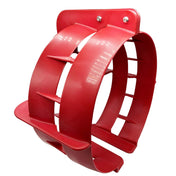
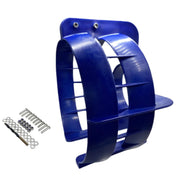
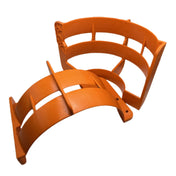
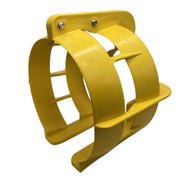
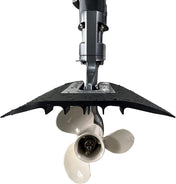
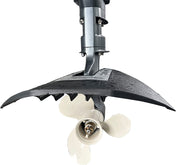
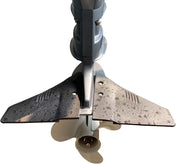
Hydrofoil Stabilizer for Outboard Motors, 5–150 HP – Aftermarket Replacement for FO2001 and HS001
Regular price $26.99Unit price