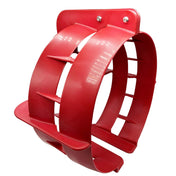
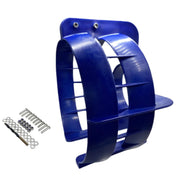
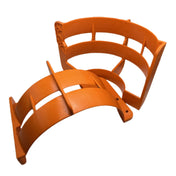
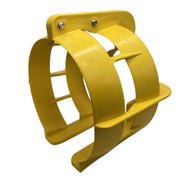
UanofCn 75HP 4-Stroke Outboard Marine Engine
(1 products)This page focuses on Mercury 4‑Stroke 75HP outboard engines. Use it to find compatible parts and practical service information, including maintenance tips, common replacement parts, and troubleshooting guidance. You can also browse the main Mercury collection. Scroll to the bottom of the page to start browsing parts for this engine, and on the collection page use the “Filter & Sort” controls to narrow results by horsepower, year range, and part category.
How to Identify Your 75HP Model
- Locate the serial plate: typically on the transom clamp bracket or starboard swivel bracket. The serial number determines exact parts compatibility for Mercury outboards.
- Decoding tags: look for shaft length (L = 20 in, XL = 25 in) and control type (tiller vs remote). These suffixes can affect cables, harnesses, and rigging items.
- Platform clues: most 75HP 4‑Stroke models are inline‑4 EFI. Earlier carbureted versions exist; check for a fuel rail/injectors (EFI) vs carburetor bowls (carb) to distinguish.
- Cowling details: EFI 75/90/115 models share many service parts; confirm with the serial number before ordering.
Platform Overview
Inline‑4 EFI 4‑Stroke (75/90/115 Family)
| Feature | Description |
|---|---|
| Configuration | Inline‑4, EFI 4‑Stroke outboard; widely used in the 75/90/115 HP range. |
| Common Models | 75 EFI 4‑Stroke; many service parts shared with 90/115 EFI variants. |
| Advantages | Smooth operation, good fuel economy, strong mid‑range torque. |
| Notes | Air intake elements and many routine service parts are common across the family; always verify by serial number. |
Inline‑4 Carbureted 4‑Stroke (Early Editions)
| Feature | Description |
|---|---|
| Configuration | Inline‑4, carbureted 4‑Stroke (earlier production). |
| Common Models | 75 4‑Stroke carbureted variants. |
| Advantages | Simple fuel system; straightforward basic service. |
| Notes | Fuel filters, intake components, and tuning differ from EFI versions; match parts to the specific platform. |
Routine Maintenance & Service Parts
Intervals below are typical guidelines for 4‑Stroke outboards. Always follow the procedures and schedules in your official service manual.
| Item | Interval* | Remarks | Parts Link |
|---|---|---|---|
| Engine oil + filter | After break‑in, then every 100 hours or annually | Use marine‑rated 4‑Stroke oil; replace filter at each oil change. | Oil Filters |
| Gear oil (lower unit) | Every 100 hours or annually | Inspect for water intrusion or metal on magnet; replace seals if contamination is found. | Mercury Lower Unit Seal Kits |
| Spark plugs | Inspect every 100 hours; replace as needed | Check gap and coloration; replace if fouled or worn. | Spark Plugs |
| Fuel filter (inline/engine) | Every 100 hours or annually | Replace more often if using E10 fuel or in high‑debris environments. | Fuel Filters |
| Water pump impeller/kit | Every 2–3 seasons or 200–300 hours | Replace sooner if weak telltale or overheat alarms occur; include wear plate and cup as needed. | Mercury Water Pump Repair Kits |
| Anodes (corrosion protection) | Inspect every 50 hours; replace when 50% consumed | Match anode material to water type (aluminum/magnesium/zinc as applicable). | Anodes |
| Air intake element | Inspect every 100 hours; replace as needed | EFI 75/90/115 family often shares the same intake element; verify by serial number. | Air Filters |
*Intervals are general recommendations; consult your service manual for your specific engine.
Frequently Used Parts Categories
- Routine Service – Service & Maintenance Kits
- Cooling System – Mercury Water Pump Repair Kits
- Fuel System – Fuel Filters
- Ignition / Electrical – Electrical Items
- Propulsion – Propellers
- Corrosion Protection – Anodes
- Sealing & Gaskets – Gaskets
Common Symptoms & Quick Checks
| Symptom | Check First | Related Parts |
|---|---|---|
| Weak telltale or overheat alarm | Inspect intake screens for debris; verify impeller condition; check thermostat operation. | Water pump repair kit, intake screen, thermostat |
| Poor acceleration or power loss | Check fuel quality; replace/inspect fuel filter; verify prop condition and pitch; scan for fouled plugs. | Fuel filter, propeller, spark plugs |
| Hard starting or rough idle | Confirm battery state and connections; inspect plugs; check for vacuum leaks at intake and fuel line restrictions. | Spark plugs, electrical connectors, air intake element, fuel line/filter |
| Gearcase noise or metal in gear oil | Drain oil and inspect magnet; pressure/vacuum test seals; verify prop shaft is straight and free of fishing line. | Lower unit seal kit, gear lube drain gaskets, propeller |
FAQs
Are parts interchangeable across the 75/90/115 EFI family?
Many routine service parts (filters, anodes, some cooling components) are shared across the EFI inline‑4 family. Always confirm fitment using your serial number, as mid‑year updates can change part requirements.
When should I replace the impeller?
In general, replace the impeller every 2–3 seasons (200–300 hours). Replace sooner if the telltale weakens, you ingest sand or silt, or you see elevated temperatures.
How often should I change lower unit gear oil?
Service gear oil every 100 hours or annually. If water or metal is found, do a seal inspection and address issues before returning to service.
What information do I need to confirm parts compatibility?
Provide the engine serial number, model designation, shaft length (L/XL), and control type (tiller/remote). Photos of the nameplate and the part in question also help ensure a correct match.
Ready to find the right components? Browse the main Mercury collection by horsepower, year, and model.
If you’re unsure about your model, send us a photo of the nameplate and the part you need and we’ll help verify compatibility.
- Most relevant
- Best selling
- Alphabetically, A-Z
- Alphabetically, Z-A
- Price, low to high
- Price, high to low
- Date, old to new
- Date, new to old

SeaSierra
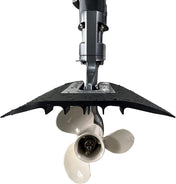
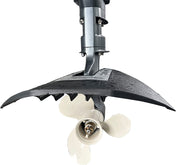
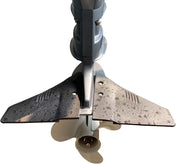
Hydrofoil Stabilizer for Outboard Motors, 5–150 HP – Aftermarket Replacement for FO2001 and HS001
Regular price $26.99Unit price