Universal 4-Stroke Marine Outboard Engine Parts
(27 products)
This page is for Universal 4-Stroke outboard engines. Use it to find compatible parts, routine service guidance, maintenance tips, common replacement items, and troubleshooting steps. You can also browse our main 4-stroke outboard collection for service kits and essentials. Scroll to the bottom to start browsing parts for this engine, and remember that on the collection pages you can use the “Filter & Sort” controls to narrow results by horsepower, year range, and part category.
Browse 4‑Stroke Service & Maintenance Kits
How to Identify Your 4‑Stroke Outboard Model
- Find the nameplate/serial plate on the transom bracket or swivel bracket. It lists the model code, serial number, and horsepower.
- Model code basics: the core model usually includes horsepower and a suffix for shaft length (S/L/X/XX), control type (tiller/remotes), and a year/region code.
- 4‑Stroke identifiers: most 4‑strokes have an oil service decal under the cowl and often an intake silencer element rather than a traditional air filter on smaller models.
- Platform clues: compact engines (portable 2–30 HP) are typically single/inline‑2/inline‑3; mid‑range (40–115 HP) are inline‑3/inline‑4; higher outputs (150+ HP) are inline‑4 or V6 EFI.
Engine/Platform Overview
Small–Mid Outboards (Portable to Mid‑Range)
| Feature |
Description |
| Configuration |
Single to inline‑3/inline‑4 4‑stroke; carbureted or EFI depending on year/brand. |
| Common Models |
Portable 2–6 HP, 8–20 HP, and 25–60 HP classes across major brands. |
| Advantages |
Easy starting, good fuel economy, low vibration, and quiet operation. |
| Notes |
Impellers and anodes are wear items; portable models may use integrated fuel tanks and inline filters. Verify shaft length and control type before ordering. |
Mid–Large Outboards (70–300+ HP)
| Feature |
Description |
| Configuration |
Inline‑4 or V6 4‑stroke with multi‑point EFI; mechanical or drive‑by‑wire controls depending on year. |
| Common Models |
70–115 HP inline‑4, and 150–300+ HP inline‑4/V6 platforms across the major OEMs. |
| Advantages |
Strong mid‑range torque, refined idle quality, and improved emissions/fuel economy. |
| Notes |
Follow OEM intervals for oil/filter and gear oil; check prop pitch and condition to maintain performance. Some models use platform‑specific anodes and impeller kits. |
Routine Maintenance & Service Parts
Intervals below are typical guidelines for 4‑stroke outboards. Always follow the service schedule and specifications in your official owner’s/service manual.
| Item |
Interval* |
Remarks |
Parts Link |
| Engine oil & filter |
Initial 20 hrs, then every 100 hrs or annually |
Warm engine before draining; use marine‑rated FC‑W oil where specified. |
Oil Filters |
| Gear oil (lower unit) |
Every 100 hrs or annually |
Inspect for metal or water intrusion; replace seals if contamination is present. |
Lower Unit Seal Kits |
| Spark plugs |
Inspect at 100 hrs; replace 100–200 hrs |
Use correct heat range and gap; replace sooner if fouled or worn. |
Spark Plugs |
| Fuel filter / water separator |
Every 100 hrs or annually |
Replace more often with ethanol fuel or contaminated supply. |
Fuel Filters |
| Water pump impeller / kit |
Every 200 hrs or 2–3 years |
Shorten interval for sandy/silty use or weak tell‑tale stream. |
Water Pump Impeller Rebuild Kits |
| Anodes (zincs/aluminum/magnesium) |
Inspect 50 hrs; replace when 50% depleted |
Match alloy to water type (salt/brackish/fresh). Ensure bonding continuity. |
Anodes |
| Intake/air filter or silencer element (where equipped) |
Inspect 100 hrs; replace as needed |
Some small outboards use serviceable foam or screen elements. |
Air Filters |
*Intervals are typical; always defer to your specific engine’s manual.
Frequently Used Parts Categories
Common Symptoms & Quick Checks
| Symptom |
Check First |
Related Parts |
| Weak tell‑tale stream / overheat alarm |
Inspect intake screen for blockage; test tell‑tale hose; verify impeller condition and thermostat function. |
Water pump impeller kit, intake screen, thermostat, cooling hoses. |
| Poor acceleration / power loss |
Check prop for dings/cavitation; replace clogged fuel filter; inspect spark plugs; verify throttle opening. |
Propeller, fuel filter, spark plugs. |
| Hard starting / rough idle |
Confirm fresh fuel and correct priming; inspect plugs; test battery voltage and connections; check IAC (EFI) where applicable. |
Spark plugs, fuel filter, starter/battery cabling, idle‑air components (EFI). |
| Gearcase noise / milky or metallic gear oil |
Drain oil and inspect; check prop shaft for fishing line; pressure/vacuum test lower unit for seal leaks. |
Lower unit seal kit, prop nut/washer, bearings. |
FAQs
Are parts interchangeable across different years or platforms?
Some routine items (spark plugs, anodes, filters) overlap across model years, but many parts—especially cooling, ignition, and gearcase components—are platform‑ and year‑specific. Always confirm by model/serial number and shaft length.
When should the impeller be replaced?
As a rule, every 200 hours or 2–3 seasons, whichever comes first. Replace sooner if the tell‑tale is weak, the engine overheats, or you operate in sandy/silty water.
How often should I change lower unit gear oil?
Change at least annually or every 100 hours. If the oil appears milky (water) or metallic (gear wear), service immediately and pressure‑test the gearcase; replace seals as needed.
What information do you need to confirm part compatibility?
Provide the model code, serial number, horsepower, shaft length (S/L/X/XX), control type (tiller/remote), and approximate year. Photos of the nameplate and the part to be replaced are also very helpful.
Ready to service your 4‑stroke outboard? Browse our main collection by category and refine using horsepower, year range, and model filters.
Shop Service & Maintenance Kits
If you’re unsure about your model, send us a clear photo of the nameplate and the part you need—we’ll help verify compatibility.


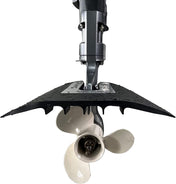 Regular price $65.00Unit price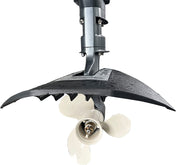
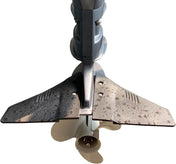 Regular price $35.00Unit price
