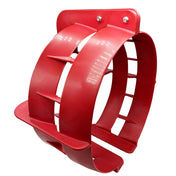
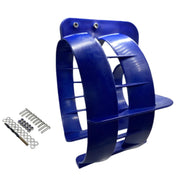
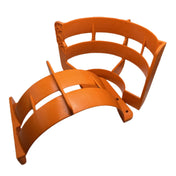
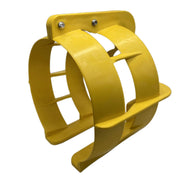
Yamaha 2-Stroke 110HP Outboard Parts
(2 products)This page is dedicated to Yamaha 2‑Stroke 110 HP outboard engines. Use it to find compatible parts, routine service guidance, maintenance tips, common replacement items, and troubleshooting help. You can also browse our main Yamaha collection at any time. Scroll to the bottom of this page to start browsing parts for this engine, and on the collection page use the “Filter & Sort” controls to narrow results by horsepower, year range, and part category/section.
How to Identify Your 110 HP Model
- Locate the nameplate/serial tag on the transom bracket or swivel bracket. It lists the model code, serial number, and often shaft length.
- Read the model code and suffix carefully: the letters typically indicate control type (tiller/remote), starting (manual/electric), and shaft length (S/L/XL). The suffix may also denote regional variants and year codes.
- For Yamaha 2‑Stroke mid‑range motors, 110 HP models are typically inline‑4 and share many components with nearby horsepower families. Confirm the exact model code to ensure gearcase, ignition, and carburetion parts match.
- If your engine uses oil‑injection (remote oil tank and pump), follow the oil pump setting and bleeding procedures in the service manual; premix models must follow the specified fuel/oil ratio.
Engine Overview
Inline‑4 Carbureted 2‑Stroke (110 HP class)
| Feature | Description |
|---|---|
| Configuration | Inline‑4, loop‑charged 2‑stroke, carbureted induction; typically equipped with oil‑injection on many models. |
| Common Models | Regional 110 HP variants based on the mid‑range inline‑4 family; often shares architecture with nearby 100–130 HP Yamaha 2‑stroke models. |
| Advantages | Strong power‑to‑weight ratio, simple carburetion, responsive mid‑range torque, and widely available service parts. |
| Notes | Ignition, carburetor jets, and gearcase components can vary by exact model code and shaft length. Match parts by serial/model information for best results. |
Routine Maintenance & Service Parts
Intervals below are general guidelines. Always follow the official Yamaha service manual for your exact model and usage conditions.
| Item | Interval* | Remarks | Parts Link |
|---|---|---|---|
| Gear oil (lower unit) | Every 100 hours or annually | Replace drain screw gaskets; inspect oil for water (milky) or metal. Investigate leaks if present. | Yamaha Lower Unit Seal Kits |
| Spark plugs | Inspect every 50 hours; replace ~100 hours | Check heat range, gap, and fouling. Replace as a set on inline‑4 models. | Spark Plugs |
| Fuel filter / in‑line filter | Every 100 hours or annually | Replace or clean; consider a water‑separating filter for protection against contamination. | Fuel Filters |
| Water pump impeller/kit | Every 2–3 seasons or 200 hours | Replace sooner if weak tell‑tale, overheat alarms, or sandy/silty operation. | Yamaha Water Pump Repair Kits |
| Anodes (internal/external) | Inspect every 50 hours; replace when ≥50% depleted | Choose alloy for your water (aluminum for brackish/salt, magnesium for fresh, zinc for traditional salt use where appropriate). | Yamaha Anodes |
| Oil‑injection system check | Annually | Verify pump linkage setting; inspect/replace brittle oil hoses and clamps; bleed air per manual. For premix models, follow the specified ratio. | Hoses |
Frequently Used Parts Categories
- Routine Service Kits – Shop Yamaha Service & Maintenance Kits
- Cooling System – Shop Water Pump Repair Kits
- Fuel System – Shop Fuel Filters & Fuel Pumps
- Ignition / Electrical – Shop Electrical Items & Spark Plugs
- Gearcase / Seals – Shop Lower Unit Seal Kits
- Propulsion – Shop Yamaha Propellers
- Corrosion Protection – Shop Yamaha Anodes
Common Symptoms & Quick Checks
| Symptom | Check First | Related Parts |
|---|---|---|
| Weak tell‑tale or overheat alarm | Intake screens for blockage; tell‑tale hose kinks; thermostat stuck; worn impeller. | Water pump kit, thermostat, intake screen |
| Poor acceleration / power loss | Fuel quality; clogged fuel filter; weak fuel pump diaphragm; carburetor varnish; damaged or mis‑pitched prop. | Fuel filter, fuel pump, carburetor kit, propeller |
| Hard starting / rough idle | Primer bulb condition; choke/enrichment actuation; spark plug gap/fouling; air leaks in fuel lines; compression check. | Spark plugs, fuel line/hoses, carburetor kit |
| Excessive smoke (2‑stroke) | Oil‑injection pump setting; premix ratio on applicable models; prolonged cold idle; thermostat stuck open. | Oil pump adjustment, spark plugs, thermostat |
| Gearcase noise or metal in gear oil | Check gear oil for water/metal; inspect prop shaft for fishing line; test for leaking seals. | Lower unit seal kit, bearings, drain screw gaskets |
FAQs
Are parts interchangeable across different years or nearby horsepower models?
Many Yamaha 2‑stroke 110 HP models share components with the 100–130 HP inline‑4 family, but ignition components, carburetor jetting, and gearcase parts can differ by model code, shaft length, and region. Always match parts to the exact model and serial.
When should I replace the impeller?
As a preventive measure, replace the impeller every 2–3 seasons (about 200 hours). In sandy, silty, or heavy‑use environments, inspect more frequently and replace sooner if the tell‑tale weakens or overheat warnings occur.
How often should I change lower unit gear oil?
Change gear oil every 100 hours or annually. If the oil appears milky (water contamination) or metallic, service the seals and inspect internal components before further use.
What information helps confirm part compatibility?
Provide the full model code, serial number, horsepower, stroke type, shaft length (S/L/XL), control type (tiller or remote), and approximate year/region. A clear photo of the nameplate and the part in question is very helpful.
Ready to find the right components? Browse our Yamaha outboard collection by horsepower, year, and model using the Filter & Sort controls.
If you’re unsure about your model, send us a photo of the nameplate and the part you need and we’ll help verify compatibility.
- Most relevant
- Best selling
- Alphabetically, A-Z
- Alphabetically, Z-A
- Price, low to high
- Price, high to low
- Date, old to new
- Date, new to old

SeaSierra
Regular price $23.99Unit price
SeaSierra
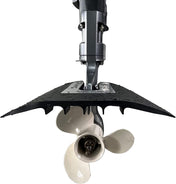
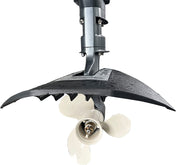
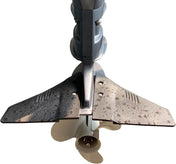
Sport-300 Whale Tail Hydrofoil Stabilizer – Fits Outboard Motors & Stern Drives 40-350 HP
Regular price $68.00Unit price