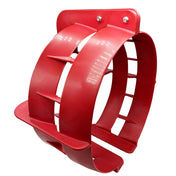
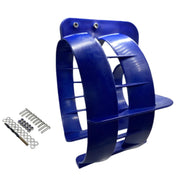
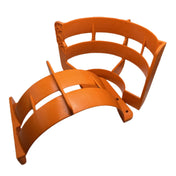
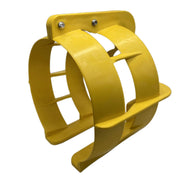
Yamaha 2-Stroke 115-225HP Outboard Engine Parts
(1 products)This page supports Yamaha 2‑Stroke 115–225HP outboard engines and helps you find compatible parts and practical service information. Below you’ll find maintenance guidelines, commonly replaced components, and troubleshooting tips. You can also browse the main Yamaha collection for a wider selection. Scroll to the bottom of this page to start browsing parts for these engines, and on the collection page use the “Filter & Sort” controls to narrow results by horsepower, year range, and part category.
Browse All Yamaha PartsHow to Identify Your 115–225HP Model
- Nameplate location: Look on the transom bracket or swivel bracket for the model/serial plate. Record the full model code, serial number, and any suffix letters.
- Reading the code: On 2‑stroke Yamaha models the suffix often indicates shaft length (S/L/X), starting/controls, and a year code. Match the complete code to confirm part compatibility.
- Platform clues: 115/130HP are typically inline‑4 two‑strokes; 150/175/200/225HP are 90‑degree V6 two‑strokes. Carbureted fuel systems are common across these ranges and years.
- Oil system: Many engines in this range use Yamaha oil‑injection. Verify the presence of the remote tank, lines, and pump; premix procedures differ if injection is disabled.
Platform Overview
Inline‑4 (115–130HP) 2‑Stroke
| Feature | Description |
|---|---|
| Configuration | Inline‑4, carbureted 2‑stroke outboards (commonly late 1980s to mid‑1990s). |
| Common Models | 115/130HP 2‑stroke inline‑4 models across multiple shaft lengths and control options. |
| Advantages | Lighter weight than V6, straightforward service access, strong mid‑range. |
| Notes | Carburetor kits and ignition parts may share compatibility across year ranges—confirm by model/serial. Water pump and anode sets are routine wear items. |
V6 (150–225HP) 2‑Stroke
| Feature | Description |
|---|---|
| Configuration | 90‑degree V6, carbureted 2‑stroke outboards (commonly mid‑1980s through late 1990s/early 2000s). |
| Common Models | 150/175/200/225HP 2‑stroke V6 models in various shaft lengths and configurations. |
| Advantages | Strong torque and top‑end performance, robust gearcases, wide parts availability. |
| Notes | Many cooling, ignition, and carb components interchange within V6 families, but gearcase, anodes, and gaskets can vary by year and shaft length—verify with the full model code. |
Routine Maintenance & Service Parts
Intervals below are general guidelines for Yamaha 2‑stroke outboards. Always follow your engine’s official service manual for exact procedures and intervals.
| Item | Interval* | Remarks | Parts Link |
|---|---|---|---|
| Gear oil (lower unit) | Every 100 hrs or annually | Check for water intrusion or metal shavings; service seals if contamination is found. | Yamaha Lower Unit Seal Kits |
| Spark plugs | 100 hrs or annually | Replace if fouled; confirm correct heat range and gap for your model. | Spark plug |
| Fuel filter / water separator | 100 hrs or annually | Replace or clean; drain water from separator more often in humid environments. | Fuel Filters |
| Water pump impeller / kit | 200 hrs or every 2 seasons | Replace annually for sandy/shallow operation or weak tell‑tale stream. | Yamaha Water Pump Repair Kits |
| Anodes | Inspect every 50 hrs; replace as needed | Replace when ~50% consumed; choose alloy for your water (salt/brackish/fresh). | Yamaha Anodes |
| Oil‑injection system check (2‑stroke) | Annually | Inspect tank, strainer, lines, and pump output; prime/bleed per manual. If premix, confirm ratio. | Yamaha Outboard Parts |
| Carburetor service / rebuild | As needed | Address hard starting, rough idle, hesitation; clean passages and replace gaskets/needles. | Carburetor |
| Thermostats | Every 2–3 years | Replace if stuck open (cold running) or closed (overheating/alarms). | Yamaha |
Frequently Used Parts Categories
- Routine Service Kits — Yamaha Service & Maintenance Kits
- Cooling System (Impellers & Pumps) — Yamaha Water Pump Repair Kits
- Fuel System Filtration — Fuel Filters
- Carburetors & Gaskets — Carburetor
- Ignition / Electrical — Electrical Items
- Gearcase Seals — Yamaha Lower Unit Seal Kits
- Propellers — Yamaha Propellers
Common Symptoms & Quick Checks
| Symptom | Check First | Related Parts |
|---|---|---|
| Weak tell‑tale stream / overheat alarm | Inspect intake screens for blockage, test impeller condition, verify thermostats and poppet valve operation. | Water pump kit, thermostat, intake screen, anodes |
| Poor acceleration / power loss | Check for damaged or wrong‑pitch prop, clogged fuel filters, carb synchronization/jetting, and fouled plugs; verify timing and compression. | Propeller, fuel filter, carburetor rebuild kit, spark plugs |
| Hard starting / rough idle | Prime fuel system, check for air leaks at fittings, clean carbs, verify choke/prime‑start operation, inspect plugs and leads. | Carb kit, fuel line/connector, spark plugs |
| Excessive smoke (2‑stroke) | Confirm correct premix or oil‑injection rate, ensure choke isn’t stuck, and check float needles for flooding. | Oil‑injection service parts, carb kit |
| Gearcase noise / metal in oil | Inspect drain plug magnets, check for milky oil (water intrusion), examine propshaft for fishing line, pressure/vacuum test seals. | Lower unit seal kit, propshaft seals, thrust washer |
FAQs
Are parts interchangeable between different years or platforms?
Many service items interchange within the same platform (e.g., inline‑4 115/130 or V6 150–225), but differences in model year, shaft length, and ignition/cooling revisions can affect fit. Always verify using the complete model code and serial.
When should I replace the impeller?
As a rule of thumb, replace every 200 hours or two seasons. In sandy, shallow, or high‑idle use, replace annually or whenever the tell‑tale weakens or overheat alarms occur.
How often should gear oil be changed?
Change lower‑unit gear oil every 100 hours or annually, and immediately after any suspected submersion. If you find milky oil or metal shavings, service seals and inspect gears/bearings.
What information do you need to confirm part compatibility?
Provide the full model code, serial number, shaft length, control/starting type, approximate year, and a photo of the nameplate. Pictures of the part needing replacement also help verify fitment.
Ready to find parts by horsepower, year, and model? Browse the main Yamaha collection to refine your search and order with confidence.
Browse All Yamaha PartsIf you’re unsure about your model, send us a photo of the nameplate and the part you need and we’ll help verify compatibility.
- Most relevant
- Best selling
- Alphabetically, A-Z
- Alphabetically, Z-A
- Price, low to high
- Price, high to low
- Date, old to new
- Date, new to old

SeaSierra
Regular price $24.89Unit price