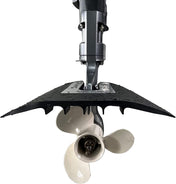
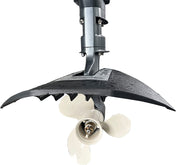
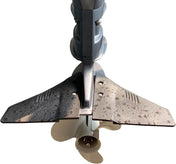
The lower unit is a sealed gearbox running in water. The oil inside lubricates gears spinning at 5,000+ RPM and protects bearings from corrosion. When that oil breaks down or gets contaminated, you're looking at $800-2,000 in gear repairs.
Changing it takes 15 minutes and costs under $20.
Table of Contents
- When to Change Lower Unit Oil
- What You'll Need
- Step-by-Step Procedure
- Reading the Old Oil
- Oil Capacity by Engine
- FAQ
When to Change Lower Unit Oil
Minimum schedule:
- Every 100 hours of operation, OR
- Once per season (even if hours are low), OR
- After any water intrusion
Change immediately if:
- Oil is milky or gray (water contamination)
- You see metal flakes in the oil
- Lower unit was submerged or flooded
- You hit something hard enough to feel it
What You'll Need
- 80W-90 marine gear lube (hypoid gear oil)
- Gear oil pump or squeeze bottle with hose
- Drain pan
- New drain and vent plug gaskets (replace every time)
- Socket or wrench for plugs (varies by brand)
- Shop towels
Plug sizes by brand:
| Brand | Drain Plug | Vent Plug |
|---|---|---|
| Yamaha | 10mm hex | 10mm hex |
| Mercury | Flathead screwdriver | Flathead screwdriver |
| Johnson/Evinrude | 5/16" or 3/8" | 5/16" or 3/8" |
| Suzuki | 10mm hex | 10mm hex |
| Honda | 8mm hex | 8mm hex |
Step-by-Step Procedure
Step 1: Position the Engine
Tilt the engine to vertical (not tilted up). This ensures complete drainage. Place a drain pan under the lower unit.
Step 2: Remove the Drain Plug First
The drain plug is at the bottom of the lower unit. The vent plug is higher up, usually at the back or side.
Order matters: Remove the drain plug first, then the vent plug. This prevents vacuum lock and lets oil flow freely.
Let it drain for at least 5 minutes. Thick, cold oil drains slowly.
Step 3: Inspect the Plugs
Both plugs have magnets on the inside. Some metal particles on the magnets are normal—that's just break-in wear. Chunks of metal or fine metal paste indicate gear damage.
Check the plug gaskets. If they're crushed or torn, replace them. Reusing bad gaskets leads to leaks.
Step 4: Fill from the Bottom
Insert your gear oil pump tube into the drain hole. Pump oil in slowly until it comes out the vent hole.
Why from the bottom? Filling from the top traps air bubbles. Filling from the bottom pushes air out the vent and ensures the gearcase is completely full.
Step 5: Install the Vent Plug First
While oil is still seeping from the vent hole, install the vent plug. This ensures no air is trapped at the top.
Step 6: Install the Drain Plug Quickly
Remove the pump tube and quickly install the drain plug. You'll lose a small amount of oil—that's normal.
Torque specs:
- Yamaha: 15-18 ft-lb
- Mercury: 10-12 ft-lb (don't overtighten—threads strip easily)
- Johnson/Evinrude: 5-7 ft-lb (hand tight plus 1/4 turn)
Step 7: Wipe and Check
Clean up any spilled oil. Run your finger around each plug to check for seepage. Start the engine briefly and check again after it's been running.
Reading the Old Oil
The oil you drain tells you what's happening inside:
| Oil Appearance | What It Means | Action |
|---|---|---|
| Amber/brown, clear | Normal wear | Continue routine changes |
| Dark brown/black | Overdue for change | Change more frequently |
| Milky gray/white | Water contamination | Find the leak source (see troubleshooting) |
| Metallic sheen | Fine metal particles | Monitor closely, may indicate wear |
| Visible metal chunks | Gear or bearing failure | Stop using, get professional inspection |
Oil Capacity by Engine
Yamaha:
- F25-F30: 12.8 oz (380 ml)
- F40-F60: 15.2 oz (450 ml)
- F70-F90: 22.5 oz (665 ml)
- F115: 25.4 oz (750 ml)
- F150-F200: 33.8 oz (1000 ml)
Mercury:
- 25-60 HP: 12-16 oz
- 75-115 HP: 24-28 oz
- 150-200 HP: 32-36 oz
- Verado: 36-40 oz
Johnson/Evinrude:
- 25-50 HP: 12-16 oz
- 60-90 HP: 20-24 oz
- 115-175 HP: 28-32 oz
Honda:
- BF25-BF50: 14-18 oz
- BF60-BF90: 22-26 oz
- BF115-BF150: 30-34 oz
When in doubt, fill until oil comes out the vent. That's the right amount.
Common Mistakes
-
Filling from the vent hole. Air gets trapped at the bottom, leaving the lower gears dry.
-
Not changing the gaskets. Old gaskets leak. New gaskets cost $2. Just replace them.
-
Overtightening the plugs. Especially on Mercury units with soft aluminum housings. Hand tight plus the specified torque—no more.
-
Ignoring milky oil. "I'll change it next time" turns a $50 seal job into a $1,500 gear replacement.
-
Using automotive gear oil. Marine gear lube has corrosion inhibitors that automotive oil lacks. Use 80W-90 marine hypoid, not the stuff from the auto parts store.
FAQ
What if oil won't come out the vent hole?
The vent passage may be clogged. Run a piece of wire through the vent hole to clear it. If it's still blocked, you may need to remove and clean the vent fitting.
Can I use synthetic gear oil?
Yes, but use marine-specific synthetic. Yamaha Yamalube and Mercury High Performance are good options. Some owners report smoother shifting with synthetic, especially in cold weather.
How do I know if I have a leak?
Check the oil level by removing the vent plug. If oil doesn't seep out when the engine is level, you're low—meaning it leaked out somewhere. Common leak points are the prop shaft seal and shift shaft seal.
What if I only ran a few hours this season?
Change it anyway. Moisture builds up even with minimal use. Annual changes are minimum regardless of hours.
My oil was overfilled. Is that a problem?
Slightly overfilled is fine. Significantly overfilled can blow seals when the oil expands from heat. Drain to the correct level.
Bottom Line
Lower unit oil changes are the cheapest insurance against expensive gear repairs. 15 minutes twice a year keeps water out, gears lubricated, and problems visible before they get expensive.
Find lower unit seal kits and maintenance supplies at SeaSierra.