When trim and tilt stops working, getting the boat on the trailer becomes difficult and performance suffers. The system is hydraulic—a motor drives a pump that moves fluid through cylinders to raise and lower the engine.
This guide covers systematic diagnosis for all common trim and tilt problems.
Table of Contents
- How Trim and Tilt Works
- Symptoms and Likely Causes
- Electrical Troubleshooting
- Hydraulic System Troubleshooting
- Mechanical Issues
- Brand-Specific Notes
- FAQ
How Trim and Tilt Works
Understanding the system helps with diagnosis:
Electrical components: - Trim/tilt switch on the helm or throttle - Relay/solenoid pack - Reversible DC motor - Wiring and connectors
Hydraulic components: - Reversible pump (driven by motor) - Fluid reservoir - Control valves - Trim cylinder(s) - Tilt cylinder - Hydraulic lines and seals
Operation: When you press UP, the relay sends power to the motor in one direction. The pump pressurizes fluid, pushing the cylinders to extend. Press DOWN, and the motor reverses, retracting the cylinders.
Trim handles fine angle adjustments (running trim). Tilt is the full range for trailering and shallow water.
Symptoms and Likely Causes
| Symptom | Most Likely Cause | Where to Start |
|---|---|---|
| Nothing happens (no sound) | Electrical: fuse, relay, wiring | Check fuse, relay clicks |
| Motor runs but no movement | Low fluid, pump failure, valve stuck | Check fluid level |
| Moves up but not down (or vice versa) | Relay problem, directional valve | Test relays |
| Moves slowly or weakly | Low fluid, worn pump, internal leak | Check fluid, inspect seals |
| Moves down on its own | Cylinder seal leak | Cylinder rebuild or replace |
| Makes grinding noise | Motor or pump damage | Remove and inspect |
| Erratic or jerky movement | Air in system, failing pump | Bleed system |
Electrical Troubleshooting
Start with electrical—it's easier to test and most common.
Check the Fuse
Most trim/tilt systems have a dedicated fuse (20-30 amp typical). Location varies: - Fuse panel at helm - In-line fuse near motor - Engine fuse block
Replace if blown. If the new fuse blows immediately, there's a short in the system.
Test the Relay/Solenoid Pack
The relay pack contains two relays (or solenoids)—one for up, one for down.
Listen test: 1. Have someone press the trim switch 2. Listen for click at the relay pack 3. One click = one relay working 4. No click = switch, wiring, or relay problem
Swap test: If one direction works, swap the two relays. If the problem follows the relay, replace it.
Direct power test: 1. Locate the motor wires at the relay pack 2. Briefly connect 12V directly to the motor (correct polarity for the direction you're testing) 3. If motor runs, the problem is relay or wiring—not motor
Check the Switch
Use a multimeter to verify the switch sends power when pressed. Many switches fail from corrosion, especially throttle-mounted switches exposed to water spray.
Wiring and Grounds
Corrosion is the enemy. Check: - Connections at the motor - Ground wire at the engine - Connector plugs in the wiring harness - Any splices or repairs
Clean corroded connections with electrical cleaner and apply dielectric grease.
Hydraulic System Troubleshooting
If electrical checks out, the problem is hydraulic.
Check Fluid Level
Low fluid is the most common hydraulic problem. The reservoir is usually at the top of the trim unit.
- Tilt the motor to full UP position
- Locate the fill plug/cap
- Remove and check level
- Should be at the bottom of the fill hole or marked level
Top off with the correct fluid (see your manual—usually Dexron ATF or manufacturer-specific). If you're adding frequently, there's a leak to find.
Identify Leaks
Look for fluid at: - Cylinder rod seals (most common) - Line connections - Pump body - Reservoir seals
A wet, oily cylinder rod means the seal is failing. Minor seepage is normal; dripping or low fluid requires repair.
Bleed Air from the System
Air in the hydraulic lines causes spongy, weak, or erratic operation.
Bleed procedure: 1. Fill reservoir to proper level 2. Run trim full up and full down 5-6 times 3. Check fluid level—add if needed 4. Repeat until operation is smooth and fluid level stabilizes
Pump Problems
If the motor runs and fluid level is good but there's no movement: - Pump coupling may be broken (motor runs but doesn't turn pump) - Pump gears worn (pumps but no pressure) - Internal valve stuck (pressure doesn't reach cylinders)
Pump repair is possible but often replacement is more practical.
Cylinder Seal Failure
Internal cylinder seals wear over time. Symptoms: - Engine drifts down slowly - Weak lift force - Requires constant switch pressure to hold position
Cylinder rebuild kits are available for most systems. This requires disassembly and careful seal installation.
Mechanical Issues
Pivot Points and Tilt Tube
The engine pivots on a tilt tube through the mounting bracket. Corrosion or lack of lubrication causes: - Stiff operation - Binding at certain angles - Increased load on hydraulic system
Grease the pivot points and tilt tube annually. If severely corroded, disassembly and cleaning may be needed.
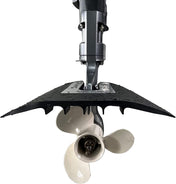
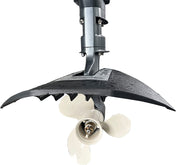
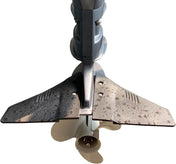
Trim Tab Interference
On some installations, the trim tab can interfere with full tilt range. Verify clearances and adjust if needed.
Mechanical Lock (Tilt Support)
The mechanical tilt support rod should engage when fully tilted for trailering. If it doesn't: - Check the spring mechanism - Verify alignment - Lubricate pivot points
Brand-Specific Notes
Yamaha
Yamaha outboards use a reliable trim/tilt design. Common issues: - Relay corrosion on the motor bracket - Fill plug location varies by model—consult manual - Uses specific Yamaha trim/tilt fluid or Dexron ATF
Mercury
Mercury models may have: - Trim sender issues (gauge reads wrong, but system works) - Fuse location varies—some in remote junction box - Older models use aluminum trim cylinders prone to corrosion
Johnson/Evinrude
Johnson/Evinrude traditional tilt systems: - Many use separate tilt and trim pumps - VRO-era motors have tilt issues related to electrical system - Relay packs are a common failure point
Suzuki and Honda
Suzuki and Honda systems are similar to Yamaha in design: - Generally reliable - Check fluid with motor fully UP - Use manufacturer-specified fluid
Manual Override
When trim/tilt fails away from the dock:
Manual release valve: Most systems have a manual release screw that allows the motor to be raised/lowered by hand. 1. Locate the release valve (usually on the trim unit body) 2. Turn counterclockwise to release 3. Physically push the motor up or down 4. Close the valve when done
Caution: With the valve open, the motor won't stay in position. Close it before running.
Preventive Maintenance
- Flush after saltwater use: Corrosion attacks cylinders and electrical connections
- Check fluid annually: Top off before the season
- Lubricate pivot points: Annual greasing prevents binding
- Exercise the system: Run full range monthly to keep seals lubricated
- Protect electrical connections: Dielectric grease on all connectors
FAQ
Can I use any ATF in my trim/tilt system?
Most systems accept Dexron III or ATF+4. Some manufacturers specify their own fluid. Never mix fluid types, and check your manual for specifications.
My trim works but the gauge doesn't move.
The trim position sender is separate from the hydraulic system. The sender or its wiring has failed. The system works fine—only the gauge is affected.
How much fluid should the reservoir hold?
Varies by model—typically 8-16 oz. Never overfill. Check with the engine fully UP and fill to the bottom of the fill hole or marked level.
The motor runs but sounds different than usual.
Could be low fluid (pump cavitating), pump wear, or motor bearing failure. Check fluid first, then inspect pump and motor.
Is it worth rebuilding the cylinders or should I replace?
Rebuild kits cost $30-80 versus $200-400+ for new cylinders. If the cylinder bore is scored, replace. If just seals, rebuild is worthwhile.
Bottom Line
Trim and tilt troubleshooting follows a logical path: electrical first (fuse, relay, switch, wiring), then hydraulic (fluid, leaks, pump), then mechanical (binding, interference). Most problems are electrical—corroded connections and failed relays. Low fluid is the top hydraulic issue.
Keep fluid topped off, connections protected, and pivot points lubricated. These three simple maintenance items prevent most trim and tilt failures.