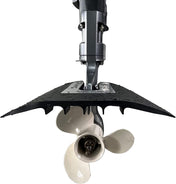
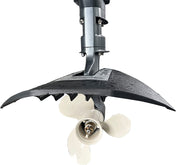
Your Suzuki outboard should start on the first turn, idle smooth, and push you to wide-open throttle without hesitation. When it doesn't, you need answers fast — not forum threads from 2009. This guide covers the most common Suzuki outboard problems, what's actually causing them, and how to fix them yourself or know when it's time to call a mechanic.
Table of Contents
- What's Happening
- Quick Diagnosis Checklist
- Most Common Problems by Model
- Causes and Fixes
- When You Need a Mechanic
- Preventing Common Issues
- FAQ
- Bottom Line
What's Happening
Suzuki four-strokes are among the most reliable outboards on the water. But reliable doesn't mean bulletproof. Across the DF25 through DF350 lineup, certain problems show up over and over: hard starting, overheating, rough idle, stalling under load, and corrosion-related failures. Most of these trace back to three root causes — fuel delivery issues, cooling system neglect, or electrical faults. The good news is that roughly 80% of Suzuki outboard issues can be diagnosed and fixed by a competent boat owner with basic tools, the right parts, and a service manual.
Quick Diagnosis Checklist
Before you start pulling things apart, run through this 5-minute checklist:
- Check the tell-tale stream. Is water flowing from the indicator hole? If it's weak or absent, you have a cooling problem. Stop the engine immediately.
- Inspect the fuel. Pull the fuel/water separator bowl. If you see water, milky fuel, or debris, your problem is likely fuel-related.
- Read the diagnostic codes. Suzuki EFI models (2004+) store fault codes. A blinking check-engine light on the dash isn't random — count the blinks. Short-short-long patterns indicate specific fault codes per the service manual.
- Check battery voltage. You need 12.6V at rest, 9.5V minimum while cranking. Anything below that and your starting problem may be electrical, not mechanical.
- Listen to the engine. Knocking at idle points to lean fuel mixture or carbon buildup. A high-pitched whine from the lower unit means gear or bearing trouble.
Most Common Problems by Model
DF140 (2002–2023)
The DF140 is Suzuki's workhorse, and its most common issue is lean surge at idle, especially in 2006–2011 models. This is often traced to failing idle air control (IAC) valves or intake gasket leaks. Owners also report premature water pump impeller wear — typically the impeller loses vanes at 250–300 hours if not replaced on schedule.
DF115 / DF90
Stalling under load is the top complaint. In most cases, the culprit is a restricted low-pressure fuel pump diaphragm or a clogged vapor separator filter that Suzuki doesn't list as a regular service item. Fuel system cleaning and fresh fuel filters resolve the majority of these cases.
DF250 / DF300
These V6 models run hot by design, with operating temps around 160–175°F. The number-one failure point is the thermostat — when it sticks partially closed, cylinder head temps can spike above 200°F and trigger the overheat alarm. Secondary issue: corrosion-related anode depletion in saltwater use, which leads to galvanic damage inside the cooling passages.
DF25 / DF30
On these smaller four-strokes, hard starting after sitting for two or more weeks is the classic complaint. The cause is almost always fuel deterioration in the carburetor bowl (carbureted models) or a leaking fuel injector O-ring (EFI models).
Causes and Fixes
1. Hard Starting or No Start
Most likely cause: Fuel delivery failure.
Start with the basics. Confirm fuel is reaching the engine by disconnecting the fuel line at the engine and cranking — you should see steady fuel flow. If not, check the primer bulb for cracks, the fuel/water separator for contamination, and the anti-siphon valve at the tank for sticking.
On EFI models (DF40 and up), check fuel pressure at the rail. Suzuki specs call for 43 psi (±3 psi) at key-on. Below 38 psi, the high-pressure fuel pump in the vapor separator is failing. Replacement pumps and Suzuki outboard parts for the vapor separator assembly are straightforward to install with basic hand tools.
Less likely but common: A failed crankshaft position sensor (CKP) will give you a crank-no-start condition with no fault code on some early EFI models. Test resistance across the sensor leads — you're looking for 180–270 ohms at room temperature.
2. Overheating
Most likely cause: Water pump impeller failure.
The impeller is the heart of the cooling system, and Suzuki recommends replacement every 300 hours or 3 years — whichever comes first. A worn impeller doesn't fail all at once. It loses efficiency gradually, so your first sign may be a tell-tale that flows fine at idle but drops off at 3,000+ RPM.
Pull the lower unit and inspect the impeller, wear plate, and housing liner. Replace as a complete kit — individual impeller-only swaps leave worn plates in place and cut the life of the new impeller in half. Quality water pump repair kits include the impeller, gaskets, wear plate, and housing liner for a complete restoration.
Also check: The thermostat. Drop it in a pot of water with a thermometer. Suzuki thermostats should begin opening at 140°F and be fully open by 158°F. If it doesn't move, replace it.
3. Rough Idle and Stalling
Most likely cause: Dirty or failing idle air control valve.
Remove the IAC valve (two bolts on the throttle body) and clean it with throttle body cleaner. Check that the pintle moves freely. If cleaning doesn't fix it, replacement is the next step. On DF90/DF115/DF140 models, a sticking IAC is responsible for roughly 60% of rough idle complaints.
Also check: Spark plugs. Suzuki four-strokes run NGK plugs gapped at 0.028–0.031 inches depending on model. Fouled or worn plugs cause misfires that feel like a rough idle. Replace all plugs as a set — don't just swap the one that looks bad.
4. Loss of Power Under Load
Most likely cause: Fuel restriction.
The DF90 through DF300 use an in-tank vapor separator with a fine mesh filter screen that's not part of the standard service schedule. After 400–500 hours, this screen clogs with varnish and debris, starving the engine under high fuel demand. Symptoms: engine runs fine at idle and low RPM but bogs or surges above 4,000 RPM.
Access the vapor separator, remove the filter screen, and clean or replace it. While you're there, replace the in-line fuel filters as well.
5. Corrosion and Anode Failure
Most likely cause: Depleted sacrificial anodes.
Suzuki outboards use multiple zinc or aluminum anodes — on the lower unit, inside the cooling system, and on the transom bracket. In saltwater, these can erode to nothing in a single season. Once the anodes are gone, electrolysis attacks the aluminum components: powerhead, lower unit housing, and internal cooling passages.
Inspect anodes every 60 days in saltwater. Replace any anode that's lost more than 50% of its mass. Keep a set of outboard anodes on hand — they're the cheapest insurance against the most expensive repairs.
When You Need a Mechanic
Handle fuel filters, impellers, anodes, spark plugs, and thermostats yourself. Call a qualified Suzuki technician for:
- Internal powerhead work — piston ring replacement, valve adjustments, or head gasket failures (white smoke + coolant loss)
- ECU or wiring harness failures — intermittent electrical faults that don't throw consistent codes
- Lower unit gear replacement — metal shavings in the gear lube mean damaged gears or bearings that require specialized tools and shimming
- Fuel injection system reprogramming — throttle position sensor calibration and injector relearn procedures require Suzuki Diagnostic System (SDS) software
Preventing Common Issues
Most Suzuki outboard problems are maintenance failures, not design failures. Stay ahead of them:
- Change gear lube every 100 hours or annually. Check for water (milky color) every time. Water in the lower unit means a failed seal — fix it before it becomes a failed bearing.
- Replace the water pump impeller every 300 hours or 3 years. Don't push it to 400. The cost of an impeller kit is a fraction of a cylinder head replacement.
- Stabilize fuel if the engine sits more than 2 weeks. Ethanol-blended fuel (E10) begins to phase-separate in as little as 30 days in humid conditions.
- Flush with fresh water after every saltwater use. Suzuki provides a flush port on most models — use it for a full 5 minutes at idle.
- Inspect and replace anodes proactively. Don't wait until they're stubs.
FAQ
Why does my Suzuki outboard stall when I put it in gear? Most commonly, the idle speed is set too low or the IAC valve is sticking. Check idle RPM — Suzuki specs range from 650–750 RPM in gear depending on model. If idle RPM is correct, clean or replace the IAC valve.
How do I read Suzuki outboard fault codes without a dealer scan tool? On 2004+ EFI models, turn the key to the ON position without starting. The check-engine light will flash a pattern: a series of short blinks for the tens digit, then long blinks for the ones digit. Reference the code against your service manual's diagnostic chart.
Are aftermarket parts safe to use on Suzuki outboards? It depends entirely on the source. OEM parts are built to spec but carry 30–50% brand markup. Generic aftermarket parts vary wildly in quality. The best approach is sourcing from suppliers like SeaSierra that work with OEM-tier factories — same production standards and materials, without the brand premium. For maintenance items like impellers, filters, and anodes, this is the smartest way to keep your engine running without overpaying.
How often should I replace the fuel filter on my Suzuki outboard? Suzuki recommends every 200 hours or annually. If you're running in areas with questionable fuel quality, cut that interval in half. A $15 fuel filter is cheap insurance against a $1,200 injector cleaning.
Bottom Line
Suzuki outboards earn their reputation for reliability, but they still need informed maintenance and timely repairs. The vast majority of Suzuki outboard troubleshooting comes down to three systems: fuel delivery, cooling, and electrical. Keep clean fuel flowing, the cooling system maintained with fresh impellers, and your anodes in good shape — and you'll avoid 90% of the problems that strand boats on the water.
When parts do need replacing, don't overpay for the brand name and don't gamble on no-name alternatives. Quality replacement Suzuki outboard parts built to OEM specifications keep your engine running right and your maintenance budget where it should be — reasonable.