Mercury 40-350HP 2-Stroke Outboard Parts
(1 products)This page focuses on Mercury 40–350HP 2‑Stroke outboard engines. It helps you quickly find compatible parts and service information, with maintenance tips, commonly replaced items, and troubleshooting guidance. You can also browse the main Mercury collection any time. Scroll to the bottom of this page to start browsing parts for this engine, and remember that on the collection page you can use the Filter & Sort controls to narrow results by horsepower, year range, and part category/section.
How to Identify Your 40–350HP Model
- Find the identification plate on the swivel/tilt bracket or clamp bracket. The primary number is the engine serial; many tags also show a four‑digit build year just beneath.
- Model codes and suffixes often indicate shaft length (S, L, XL), control type (tiller vs. remote), and market/version. Serial breaks determine the exact parts list used for your motor.
- Platform clues: 40–90 HP are typically inline 2‑ or 3‑cylinder 2‑strokes; 135 HP and up are usually V6 high‑output 2‑strokes (including EFI/DFI variants). Oil‑injected models will have an onboard oil tank and lines to the engine.
- Induction/labeling: Carbureted units may be labeled "Classic/Carb"; DFI models are commonly badged "OptiMax." When in doubt, confirm by serial number.
Platform Overview
40–90 HP Inline Platforms (2‑Stroke)
| Feature | Description |
|---|---|
| Configuration | Inline 2‑ or 3‑cylinder, carbureted 2‑stroke; many units use oil injection rather than pre‑mix. |
| Common Models | 40/50/60/75/90 HP 2‑Stroke variants, including utility/SeaPro and certain Jet models. |
| Advantages | Lightweight, simple service, good mid‑range torque for small boats and work skiffs. |
| Notes | Keep carbs synced and clean, service the water pump regularly, verify correct prop pitch. Many parts interchange within serial ranges—always check the serial tag. |
135–350 HP V‑Configuration Platforms (2‑Stroke)
| Feature | Description |
|---|---|
| Configuration | High‑output V6/V8 2‑stroke families in carb, EFI, and DFI (OptiMax) forms, widely used for offshore, bass, and performance applications. |
| Common Models | 135/150/175/200/225/250/300+ HP 2‑Stroke models and select high‑performance variants. |
| Advantages | Strong hole‑shot and top‑end power; broad propeller selection; robust gearcases for heavy loads and higher speeds. |
| Notes | Maintain oil injection components, filters, and thermostats/poppet valves. DFI systems are sensitive to fuel quality—keep filters fresh and water separated. Confirm parts by serial range. |
Routine Maintenance & Service Parts
Intervals below are general guidelines for 2‑stroke outboards; always follow the official Mercury service manual for your exact serial range and usage.
| Item | Interval* | Remarks | Parts Link |
|---|---|---|---|
| Gear oil (lower unit) | Every 100 hrs or annually | Check for water intrusion (milky oil). Replace seals if contamination is found. | Mercury Outboard Parts |
| Spark plugs | Every 100 hrs or annually | Inspect color and gap; replace sooner if fouling or misfire occurs. | Spark Plugs |
| Fuel filter / water separator | Every 100 hrs or annually | Critical on EFI/DFI models; drain/replace more often in high‑moisture environments. | Fuel Filters |
| Water pump impeller/kit | Every 2–3 seasons (or 200–300 hrs) | Service more frequently in sandy/silty water or when overheat alarms occur. | Mercury Water Pump Repair Kits |
| Anodes (corrosion protection) | Inspect each service; replace when 50% consumed | Use alloy appropriate for your water (aluminum, zinc, or magnesium). | Anodes |
| Oil injection system check | Every 100 hrs | Inspect tank screen, lines, and pump operation. If pre‑mix, confirm ratio per manual (often 50:1). | Hoses |
| Propeller & hub inspection | Seasonally | Remove line, check for dings, and verify correct pitch for load/RPM. | Propellers |
| Lower unit seal kit (as needed) | When leaks or milky oil present | Replace seals before gear damage occurs; pressure/vacuum test recommended. | Mercury Lower Unit Seal Kits |
Frequently Used Parts Categories
- Routine Service: Service & Maintenance Kits
- Cooling System: Mercury Water Pump Repair Kits
- Gearcase & Sealing: Mercury Lower Unit Seal Kits
- Fuel System: Fuel Filters
- Ignition / Electrical: Electrical Items
- Corrosion Protection: Anodes
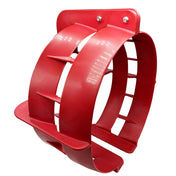
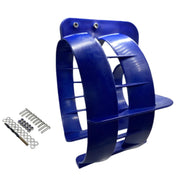
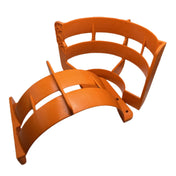
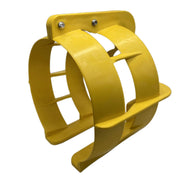
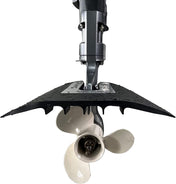
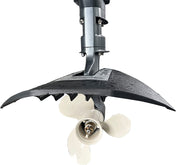
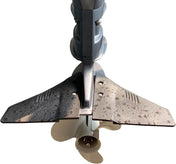
- Performance & Protection: Propeller Guards
Common Symptoms & Quick Checks
| Symptom | Check First | Related Parts |
|---|---|---|
| Weak tell‑tale stream or overheat alarm | Inspect intake screens for blockage; verify impeller condition; test thermostat opening. | Water pump kit, thermostat, intake screen, poppet valve |
| Poor acceleration or power loss | Check prop damage/slip; replace fuel filter; verify carb sync/cleanliness or DFI air/fuel pressures. | Propeller, fuel filter, spark plugs, reed valves |
| Hard starting or rough idle | Confirm fresh fuel and proper prime; inspect enrichener/choke function; check for air leaks in lines. | Fuel pump, hoses, spark plugs, carb kits |
| Excessive smoke (2‑Stroke) | Verify oil ratio or injection setting; check for stuck thermostat causing cold running; ensure correct plugs/heat range. | Oil injection hoses, spark plugs, thermostat |
| Gearcase noise or metal in gear oil | Check oil level/condition; pressure/vacuum test for seal leaks; inspect prop hub for spin. | Lower unit seal kit, gear lube, prop hub kit |
FAQs
Are parts interchangeable between different years or platforms?
Sometimes. Many Mercury 2‑stroke families share components within a serial range, but changes across years and platforms (inline vs. V6, carb vs. EFI/DFI) are common. Verify by serial number to ensure proper fit.
When should I replace the water pump impeller?
As a general rule, every 2–3 seasons (or 200–300 hours), and sooner if you operate in sandy/silty water or notice weak tell‑tale flow or rising temperatures. Full pump kits are recommended when wear is present.
How often should I change lower unit gear oil?
At least annually or every 100 hours. Inspect for metal and milky color (water contamination). If water is present, repair seals and re‑test before continued operation.
What information do you need to confirm part compatibility?
The engine serial number, horsepower, approximate year, shaft length (S/L/XL), and whether the engine is carbureted, EFI, or DFI (OptiMax). Photos of the nameplate and the part area also help.
Ready to shop? Browse the main Mercury collection and use Filter & Sort to narrow by horsepower, year range, and model.
If you’re unsure about your model, send us a clear photo of the nameplate and the part you need—we’ll help verify compatibility.
- Most relevant
- Best selling
- Alphabetically, A-Z
- Alphabetically, Z-A
- Price, low to high
- Price, high to low
- Date, old to new
- Date, new to old

SeaSierra
MerCruiser Alpha One Gen II Water Pump Service Kit with Plate – Replaces 47-8M0100526
Regular price $28.60Unit price