Propeller removal is a routine skill every boat owner should have. You'll need it for inspection, repair, fishing line removal, or swapping props for different conditions. The job takes 10 minutes with the right tools and technique.
Table of Contents
Tools Needed
For removal:
- Socket or wrench matching prop nut size
- Prop block or wooden block
- Penetrating oil (if stuck)
- Gloves (prop edges are sharp)
For installation:
- Clean rag
- Marine grease (waterproof)
- Torque wrench (recommended)
- New cotter pin or lock tab (if applicable)
Prop Nut Sizes by Brand
| Brand | Common Sizes |
|---|---|
| Yamaha | 17mm, 18mm, 22mm |
| Mercury | 1-1/16" (27mm) most common |
| Johnson/Evinrude | 15/16", 1-1/16" |
| Suzuki | 18mm, 21mm |
| Honda | 18mm, 22mm |
Removal Procedure
Step 1: Prepare the Engine
Shift into neutral. Tilt the engine to access the prop easily. Kill the engine and remove the key—props can cause serious injury if the engine starts unexpectedly.
Step 2: Remove the Cotter Pin or Lock
Most outboards use one of these locking methods:
Cotter pin: Straighten the bent ends with pliers, then pull the pin out. Discard it—always use a new cotter pin on reinstallation.
Lock tab washer: Bend the tabs away from the nut with a screwdriver. These can be reused if not damaged.
Castle nut with keeper: Similar to cotter pin removal.
Step 3: Block the Propeller
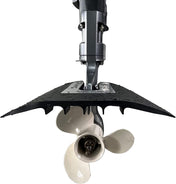
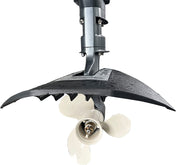
Wedge a wooden block or commercial prop block between one blade and the anti-ventilation plate. This prevents the prop from spinning while you remove the nut.
Never use your hand to hold the prop while loosening the nut. If the wrench slips, your hand goes into a sharp blade edge.
Step 4: Remove the Nut
Turn counterclockwise to loosen. Standard threads on most outboards (loosens counterclockwise). Some older OMC engines have left-hand threads on certain models—check your manual if the nut won't budge.
The nut may be tight. Use a six-point socket for better grip. If seized, apply penetrating oil and wait 10 minutes.
Step 5: Remove Hardware and Propeller
Behind the nut, you'll find some combination of:
- Thrust washer
- Spacer
- Tab washer
Keep track of the order—take a photo if unsure. These components must go back in the correct sequence.
Slide the prop off the shaft. If it's stuck, rock it side to side while pulling. Don't use a hammer on the blades—you'll damage them.
Stuck Propeller?
If the prop won't pull off:
- Soak the hub area with penetrating oil
- Let it sit for an hour
- Tap the BACK of the hub (not the blades) with a rubber mallet
- Use a gear puller designed for props if still stuck
Installation Procedure
Step 1: Inspect Everything
Before reinstalling, check:
- Prop shaft for fishing line, corrosion, or damage
- Prop hub for cracks or wear
- Splines for damage on both shaft and prop
- All hardware for wear or corrosion
Remove any fishing line wrapped around the shaft. Even a small amount creates heat and wears seals.
Step 2: Grease the Shaft
Apply a thin coat of marine grease to the prop shaft splines. This:
- Prevents galvanic corrosion between dissimilar metals
- Makes future removal easier
- Doesn't affect torque or prop security
Use waterproof marine grease, not regular automotive grease.
Step 3: Install Hardware in Order
The typical order (from engine to prop nut):
- Thrust washer (if equipped)—tab faces forward into the slot
- Propeller—slide onto splines
- Spacer/washer (if equipped)
- Tab washer (if equipped)
- Prop nut
The thrust washer transfers prop thrust to the gearcase. Install it with any locating tab aligned with the slot on the shaft.
Step 4: Tighten the Nut
Block the prop again. Tighten the nut clockwise (standard threads).
Torque method: Use a torque wrench set to specification (see table below).
No torque wrench: Tighten firmly—snug plus about 1/4 turn. Not as tight as possible, but definitely more than hand-tight.
Step 5: Install the Lock
Cotter pin: Insert through the castle nut slots and prop shaft hole. Bend both ends around the nut to secure.
Tab washer: Bend one or two tabs up against flat surfaces of the nut.
Torque Specifications
| Brand | Torque (ft-lb) |
|---|---|
| Yamaha | 30-40 ft-lb (most models) |
| Mercury | 50-55 ft-lb (most models) |
| Johnson/Evinrude | 35-40 ft-lb |
| Suzuki | 36-43 ft-lb |
| Honda | 33-40 ft-lb |
Note: Specs vary by model and engine size. Check your service manual for exact specifications.
Common Problems
Nut Won't Budge
Cause: Corrosion from saltwater or lack of grease on installation.
Solution: Soak with penetrating oil. Use a six-point socket for better grip. Apply heat to the nut (not the shaft) if necessary. Consider an impact wrench for severely seized nuts.
Prop Stuck on Shaft
Cause: Galvanic corrosion between aluminum prop and stainless shaft (or vice versa).
Solution: Penetrating oil and time. Rubber mallet on the hub. Gear puller for stubborn cases. Always grease the shaft on reinstallation to prevent recurrence.
Nut Keeps Loosening
Cause: Missing cotter pin, improper torque, or damaged threads.
Solution: Always install new cotter pin. Verify correct torque. Inspect threads on shaft and nut—replace damaged components.
Can't Find the Right Nut Size
Cause: Aftermarket prop may have different nut than OEM.
Solution: Measure the nut with calipers. Common sizes are metric (17mm, 18mm, 22mm) or SAE (15/16", 1-1/16"). Keep a spare nut in your tool kit.
Prop Inspection Checklist
While the prop is off, check:
- [ ] Blade tips for dings, bends, or chunks missing
- [ ] Blade edges for nicks and rolled edges
- [ ] Hub for cracks or rubber deterioration (rubber hub props)
- [ ] Bore for wear where it contacts the shaft
- [ ] Thrust surfaces for wear
Minor dings can be dressed with a file. Significant damage requires professional repair or replacement.
FAQ
How often should I remove the prop for inspection?
At minimum, annually or every 100 hours. Check more frequently if you run in debris-prone water or after any impact.
Can I use regular grease on the prop shaft?
Use marine-grade waterproof grease. Regular automotive grease washes away and doesn't prevent galvanic corrosion as effectively.
The prop spins freely with the engine off. Is that normal?
Yes. In neutral, the prop should spin freely. If it doesn't spin or makes grinding noises, there may be a gearcase issue.
Do I need to replace the cotter pin every time?
Yes. Cotter pins are designed for single use. They weaken when bent and may fail if reused.
My prop nut is metric but my socket set is SAE. Can I use a close size?
Using the wrong size risks rounding the nut. A 1-1/16" socket is close to 27mm but not exact. Get the right size—a rounded prop nut creates major problems.
Bottom Line
Prop removal and installation is basic maintenance that every boat owner should master. Keep the right size socket on board, always grease the shaft, and never skip the cotter pin. A properly installed prop is secure and easy to remove when needed.
Find propellers and hardware for your outboard at SeaSierra.