A dinged propeller creates vibration, reduces efficiency, and can damage your lower unit bearings over time. But not all prop damage requires replacement—many issues can be professionally repaired for less than the cost of a new prop.
This guide helps you decide when to repair, when to replace, and when a damaged prop is still usable.
Table of Contents
- Types of Propeller Damage
- Damage Assessment Guide
- Repair vs Replace Decision
- Professional Repair Process
- DIY Fixes
- FAQ
Types of Propeller Damage
Blade Dings and Nicks
Small chips or dents in the blade edges from striking debris or rocks.
Effect: Minor loss of efficiency, slight vibration if severe
Typical cause: Hitting submerged objects, sand, or gravel
Bent Blades
One or more blades pushed out of their original plane or angle.
Effect: Significant vibration, reduced top speed, potential gearcase damage
Typical cause: Impact with solid object (log, rock, dock)
Rolled Edges
The thin outer edges of blades curl over from repeated minor impacts.
Effect: Reduced efficiency, increased fuel consumption, slight vibration
Typical cause: Running in sandy or debris-prone water
Missing Blade Material
Chunks of blade missing, significant portions of blade gone.
Effect: Severe vibration, dramatic performance loss, dangerous if large section missing
Typical cause: Major impact, cavitation erosion, material fatigue
Hub Damage
Cracks, deformation, or rubber deterioration in the hub assembly.
Effect: Prop may slip, lose thrust, or fail completely
Typical cause: Impact, age (rubber hubs), over-torquing
Cracked Blades
Visible cracks in blade material, especially near the hub or at stress points.
Effect: Risk of blade separation, structural failure
Typical cause: Impact stress, fatigue from vibration, manufacturing defect
Damage Assessment Guide
Still Usable (Temporary)
These conditions allow continued use until you can address the issue:
- Small dings (less than 1/4" deep) on blade edges
- Minor nicks that don't affect balance
- Light surface scratches
- Small areas of rolled edge
Action: Monitor for worsening. Plan for repair or replacement.
Needs Repair Soon
These conditions cause noticeable performance loss or risk worsening:
- Multiple dings or one significant ding
- Slightly bent blade tip (less than 1/2")
- Rolled edges along significant portion of blade
- Noticeable vibration at cruise speed
Action: Schedule repair before next extended use. Don't run at high speed.
Needs Immediate Attention
These conditions risk damage to the gearcase or are safety concerns:
- Noticeably bent blade (visible out of plane)
- Severe vibration at any speed
- Visible cracks anywhere on prop
- Missing blade sections larger than 1" square
- Hub cracks or damage
Action: Don't use until repaired or replaced. Running a severely damaged prop can destroy lower unit bearings.
Replace Don't Repair
These conditions make repair impractical or unsafe:
- Multiple bent blades
- Cracks through blade structure
- Hub structural damage
- Blade material loss near hub
- Damage exceeds 30% of blade area
- Repair cost exceeds 60% of new prop cost
Repair vs Replace Decision
Cost Comparison
Typical repair costs:
- Minor ding repair: $30-50
- Bent blade straightening: $40-80
- Rolled edge restoration: $40-60
- Complete reconditioning: $75-150
New prop costs:
- Aluminum props: $80-250
- Stainless steel props: $300-800+
When Repair Makes Sense
- Single bent blade with no cracks
- Edge damage that can be dressed
- Prop is relatively new and otherwise good
- High-quality prop worth preserving (stainless)
- Repair cost is less than 50% of replacement
When Replacement Makes Sense
- Multiple damage points
- Older prop with cumulative wear
- Basic aluminum prop with moderate damage
- Cracking present anywhere
- Repair cost approaches replacement cost
- Hub system damage (rubber hub props)
The Aluminum vs Stainless Factor
Aluminum props: Lower cost to replace, but also cheaper to repair. If repair cost exceeds $100 and a new aluminum prop costs $150, replacement often makes more sense.
Stainless props: Higher replacement cost justifies more extensive repairs. A $500 stainless prop is worth a $150 repair.
Professional Repair Process
What a prop shop does:
Inspection
X-ray or dye penetrant testing for cracks (on high-value props). Visual inspection of blade geometry.
Straightening
Bent blades are carefully reformed using presses and heat (for stainless). This requires skill—improper straightening can weaken the blade.
Welding
Missing material on stainless props can be built up with welding, then ground to shape. Not usually practical for aluminum.
Reconditioning
Grinding and filing to remove nicks, restore edge profile, and balance the prop.
Balancing
Final check on a balancing fixture. An unbalanced prop creates vibration regardless of how good it looks.
Pitch and Diameter Check
Reputable shops verify the prop still meets original specifications after repair.
DIY Fixes
Some minor repairs can be done yourself, but know the limits.
What You Can Do
Dressing minor nicks: A flat file can smooth small edge nicks. Work carefully to maintain blade shape. File in one direction along the edge.
Removing burrs: Sharp raised edges from impacts can be filed smooth.
Cleaning: Remove marine growth and debris regularly.
What Requires a Professional
- Any straightening of bent blades
- Cracks (don't use a cracked prop)
- Restoring blade shape after material loss
- Balancing
- Hub repairs
The risk of DIY straightening: Bending aluminum blades by hand usually cracks them or creates stress points. Even if they look straight, they may fail later. Professional shops use heat and presses to avoid this.
Impact on Performance
How much does damage really matter?
Small Dings (1-2 nicks)
- Speed loss: 0-2%
- Fuel efficiency loss: minimal
- Vibration: usually none
Moderate Damage (multiple dings, slight bend)
- Speed loss: 3-8%
- Fuel efficiency loss: 5-10%
- Vibration: noticeable at certain RPMs
Significant Damage (bent blade, missing material)
- Speed loss: 10-20%+
- Fuel efficiency loss: 15-25%
- Vibration: constant, potentially damaging
Preventing Prop Damage
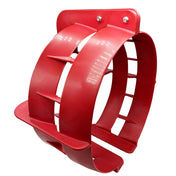
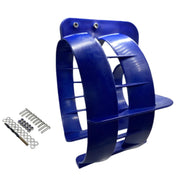
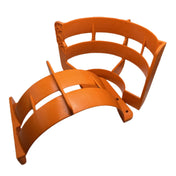
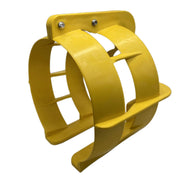
- Run a prop guard in debris-prone waters (fishing, shallow areas)
- Trim up when running in shallows
- Watch for floating debris
- Slow down in unfamiliar water
- Carry a spare prop on board
FAQ
Can I run with a dinged prop until I get it fixed?
Small dings, yes—but monitor for vibration. Bent blades or significant damage should not be run; the vibration can damage lower unit bearings.
How do I know if my prop is out of balance?
Vibration that increases with speed, especially at cruise RPM. Have it professionally checked if you suspect balance issues.
Is it worth repairing a cheap aluminum prop?
Calculate repair cost vs. new. If the prop is under $150 new and repair costs $75+, replacement often makes more sense.
Can a repaired prop perform like new?
A properly repaired prop by a skilled shop can be restored to original specifications. However, repeated repairs eventually weaken the blade material.
Should I carry a spare prop?
Absolutely. A spare prop and the tools to change it can save a trip. Even if damaged, a spare gets you back to the dock.
Bottom Line
Minor prop damage is normal and usually repairable. Significant damage—bent blades, cracks, or major material loss—requires professional assessment. Factor in repair cost, prop value, and safety when deciding. When in doubt, have a prop shop evaluate it. A vibrating prop isn't just annoying—it's wearing out your gearcase.
Find replacement propellers for your outboard at SeaSierra.