Anodes don't fail suddenly—they waste away gradually while protecting your outboard from corrosion. The trick is catching them before they're completely gone, because by then your lower unit has already started corroding.
Here's how to assess your anodes and know when it's time to replace them.
Table of Contents
- The 50% Rule
- Visual Inspection Guide
- What Different Wear Patterns Mean
- Hidden Anodes You Might Miss
- Signs You've Waited Too Long
- Inspection Schedule
- FAQ
The 50% Rule
Replace anodes when they've lost 50% of their original mass—not when they're completely gone.
Why 50%? An anode's protection drops off as it gets smaller. At 50% consumption, it's still doing its job. At 75%, protection is marginal. At 100%, there's nothing left to protect anything.
The problem: most boat owners only think about anodes when they notice corrosion on the lower unit. By then, damage has already occurred.
Visual Inspection Guide
Trim Tab Anode
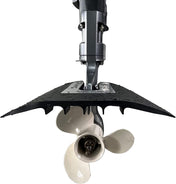
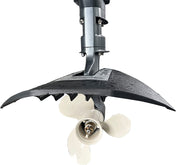
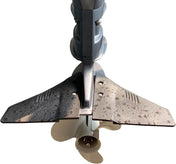
The large fin-shaped anode on the back of your lower unit is the easiest to check.
Healthy anode: Smooth surface with even corrosion across the face. May have some pitting but maintains its general shape.
Time to replace: - Thickness reduced by half or more - Deep grooves or channels eaten through - Chunks missing - Smooth, shiny spots (passivation—anode isn't working)
Measurement tip: A new trim tab anode is typically 3/8" to 1/2" thick. When it's down to 3/16" or less, replace it.
Button/Disc Anodes
Smaller anodes on the transom bracket, power trim, or other locations.
These are harder to judge visually because they're small. Look for: - Original dome shape flattened to a disc - Bolt head becoming exposed - Edges eaten away, leaving just the center
When a button anode is less than half its original height, it's time.
Pencil/Plug Anodes
Some outboards (especially Mercury models) have pencil-shaped anodes that thread into the cooling system or exhaust housing.
Remove and measure against a new one. When they're down to half diameter, replace them.
What Different Wear Patterns Mean
How your anodes corrode tells you whether your protection system is working correctly.
Even Corrosion Across All Anodes
Meaning: System working normally. Anodes are protecting the outboard as designed.
Action: Replace anodes on schedule when they hit 50% consumption.
One Anode Corroding Much Faster Than Others
Meaning: Possible stray current in that area, or poor electrical bonding elsewhere. The fast-corroding anode is taking all the load.
Action: Check electrical connections. Ensure all anodes have good metal-to-metal contact. Look for damaged wiring near the fast-wearing anode.
Anodes Not Corroding at All
Meaning: Either you're in the wrong water type (zinc in freshwater), the anode has passivated, or there's no electrical connection.
Action: - Freshwater? Switch to magnesium anodes - Check that mounting surfaces are bare metal, not painted - Test continuity between anode and lower unit
Rapid Consumption (Gone in Weeks)
Meaning: Stray current corrosion, not galvanic corrosion. Electrical current from your boat or nearby boats is accelerating the process dramatically.
Action: This needs professional diagnosis. Stray current can destroy a lower unit in one season. Get an ABYC-certified electrician to test your boat's electrical system and the marina's shore power.
White Crusty Buildup on Zinc Anodes
Meaning: Normal for zinc in saltwater. The white material is zinc oxide/chloride.
Action: Wire brush it off during inspection. Heavy buildup can insulate the anode from the water, reducing protection.
Hidden Anodes You Might Miss
Don't just check the obvious ones. Many outboards have anodes in locations you might overlook:
Inside the exhaust housing: Yamaha F150, F200, and larger four-strokes have an internal anode accessed by removing a plug on the midsection. Check your service manual.
Power trim reservoir: Some brands mount a small anode on or near the trim/tilt hydraulic unit.
Inside the gearcase: Mercury Verado models have an internal gearcase anode. It's not visible without disassembly.
Engine block: Older two-strokes and some Johnson/Evinrude models have pencil anodes threaded into the water jacket.
Stern drive gimbal housing: If you have a sterndrive, don't forget the anodes on the transom assembly and gimbal housing.
Count all your anodes. A 115 HP four-stroke typically has 3-4 anodes. Miss one, and that area goes unprotected.
Signs You've Waited Too Long
If you see any of these, anodes should have been replaced months ago:
White, powdery corrosion on the lower unit housing: This is aluminum oxide—your lower unit is corroding. The protective paint has failed and bare aluminum is exposed to galvanic attack.
Pitting on the cavitation plate or skeg: Small pockmarks that weren't there before indicate localized corrosion.
Paint blistering or flaking: Corrosion is happening underneath the paint layer.
Stainless hardware showing rust stains: When the anode protection fails, even stainless steel starts showing signs of galvanic attack.
Pink or red streaks: On units with bronze components, this indicates copper leaching from bronze—a sign of severe galvanic corrosion called dezincification.
If you're seeing these signs, replace the anodes immediately and assess the damage. Minor pitting can be addressed with touch-up paint. Severe pitting may need professional repair.
Inspection Schedule
| Usage | Inspection Frequency |
|---|---|
| Saltwater, frequent use | Every 30 days |
| Saltwater, occasional use | Every 60 days |
| Brackish water | Every 60 days |
| Freshwater | Every 90 days |
| Year-round storage in water | Monthly |
| Winter storage (dry) | Before launch, after haul-out |
At minimum: Check anodes at every oil change and during spring commissioning.
FAQ
My anodes look fine but I see corrosion on the lower unit. What's wrong?
Either the anodes have poor electrical contact (paint or corrosion under the mounting surface), or you have stray current that's overwhelming the anodes' capacity. Check mounting surfaces and test for stray current.
Can I clean old anodes and reuse them?
If they're above 50% mass, yes—wire brush them clean and reinstall. Below 50%, replace them. Never paint or coat anodes.
The anode bolt is seized. How do I remove it?
Soak with penetrating oil for 24 hours. Apply heat to the surrounding housing (not the bolt) to expand the aluminum. Use a six-point socket to avoid rounding the head. Worst case, drill it out and re-tap the threads.
Is one anode enough if I rarely use the boat?
No. Even sitting at the dock, your outboard is corroding. Time in water matters more than running hours when it comes to galvanic corrosion.
How long do anodes last?
In saltwater with normal use: 6-12 months for zinc, 12-18 months for aluminum. In freshwater with magnesium: 6-9 months. But check regularly—conditions vary.
Protect the Investment
An outboard lower unit costs $1,500-4,000 to replace. A set of anodes costs $20-50. Check them regularly, replace at 50% consumption, and you'll never have to learn what a corroded gearcase housing looks like firsthand.
Find the right anodes for your outboard at SeaSierra.