A thorough pre-season inspection catches problems while you're still at the dock—not miles from shore. Even if your engine ran perfectly last fall, months of storage can create new issues.
This guide covers a systematic inspection to ensure your outboard is ready for the season.
Table of Contents
- Visual Inspection
- Fuel System Inspection
- Electrical System Inspection
- Cooling System Inspection
- Lower Unit Inspection
- Controls and Safety Equipment
- FAQ
Visual Inspection
Cowling and Exterior
Start with a general walk-around:
Check for:
- Cracks in cowling
- Missing hardware or fasteners
- Paint damage or corrosion spots
- Animal nesting (mice, wasps, etc.)
- Evidence of leaks (oil stains, fuel residue)
Under the cowling:
- Remove cowling and inspect inside
- Look for rodent damage to wiring
- Check for corrosion on metal components
- Verify nothing is loose or disconnected
Mounting and Transom
Inspect how the engine attaches to the boat:
- Transom brackets tight and not corroded
- Mounting bolts secure
- Tilt pin in place
- Transom wood solid (no softness indicating rot)
Tilt and Trim
Manually tilt the engine:
- Should move smoothly through full range
- No binding or unusual resistance
- Check hydraulic ram for leaks
- Verify trim rams aren't pitted
Fuel System Inspection
Fuel Tank
Check the tank condition:
- Look for cracks, dents, or damage
- Verify vent is clear
- Check tank hold-down straps
- Inspect fuel pickup and sender
Fuel Lines
Examine all fuel lines end-to-end:
| What to Look For | Action Needed |
|---|---|
| Cracks or hardening | Replace line |
| Soft spots or swelling | Replace line |
| Discoloration | May indicate ethanol damage—replace |
| Loose fittings | Tighten or replace |
Primer Bulb
Test the primer bulb:
- Should be firm when squeezed
- Should stay firm (no leakdown)
- Check for cracks or softness
- Replace if spongy or doesn't hold prime
Fuel Filter
The fuel filter should be replaced annually:
- Check filter bowl for debris or water (if equipped)
- Note any discoloration
- Plan replacement even if it looks clean
Find fuel filters for your engine.
Carburetor or EFI Components
Carbureted engines:
- Check for fuel staining around carburetor
- Verify choke linkage moves freely
- Look for loose or missing air intake components
Fuel-injected engines:
- Check injector wiring connections
- Look for fuel residue around injectors
- Verify throttle body is clean
Electrical System Inspection
Battery
Test the battery before the season:
- Charge fully
- Check voltage (should be 12.6V or higher)
- Load test or have tested at auto parts store
- Inspect for swelling, cracks, or leaks
Wiring
Inspect all visible wiring:
Look for:
- Corrosion on terminals (white or green deposits)
- Chafed or exposed wire
- Loose connections
- Melted insulation (indicates overheating)
- Rodent damage
Spark Plugs
Remove and inspect each plug:
- Check electrode condition
- Measure gap (typically 0.035-0.040")
- Look for oil or carbon fouling
- Replace if worn or damaged
Ignition Components
Check under the cowling:
- CDI/ECU connections secure
- Coil wires not cracked or deteriorated
- Kill switch wiring intact
- Flywheel cover secure
Cooling System Inspection
Water Intake
Check the lower unit water intake:
- Screens should be clear of debris
- No paint or growth blocking openings
- Intake area not damaged
Tell-Tale
Inspect the tell-tale outlet:
- Hole should be clear
- Use wire or needle to clear if blocked
- Check for marine growth
Thermostat Housing
Look at the thermostat area:
- Check for corrosion
- Look for mineral deposits
- Verify bolts are secure
Water Pump Impeller
If the impeller is more than one year old, plan to replace it:
- Impellers degrade from age and drying out during storage
- Failure risk increases significantly after year one
- Prevention is cheaper than overheating damage
Find water pump kits for your outboard.
Lower Unit Inspection
Gear Oil
Check the gear oil condition:
- Position engine upright
- Remove lower (drain) plug over container
- Let small amount drain into container
- Check color and consistency
What it tells you:
| Oil Appearance | Meaning |
|---|---|
| Clear/amber | Normal |
| Dark but clean | OK, may be due for change |
| Milky/gray | Water intrusion—seal problem |
| Metal particles | Gear wear—needs service |
Propeller
Remove and inspect the prop:
- Bent, chipped, or cracked blades
- Damage to hub
- Fishing line around shaft
- Prop shaft spline condition
While prop is off:
- Apply waterproof grease to shaft
- Check shear pin (if equipped)
- Verify cotter pin in place
Anodes
Inspect all sacrificial anodes:
- Trim anode
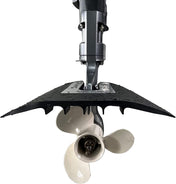
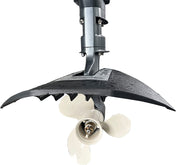
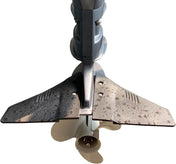
- Cavitation plate anode
- Lower unit anodes
Replace any anode that's more than 50% consumed.
Skeg
Check the skeg (vertical fin under the prop):
- Chips or damage affect handling
- Significant damage may need repair
- Minor chips can wait but should be addressed
Controls and Safety Equipment
Throttle and Shift Controls
Operate the control handle through full range:
- Smooth operation without binding
- Proper detent in neutral
- Full throttle and idle positions reached
- Returns to idle when released
Control Cables
Inspect cables where visible:
- Check for corrosion
- Look for kinks or damage
- Verify secure connections
- Test for smooth operation
Steering
Check steering system:
Cable steering:
- Operate through full range
- Check for binding or stiffness
- Inspect cable ends for corrosion
Hydraulic steering:
- Check fluid level
- Look for leaks at helm and ram
- Operate smoothly through range
Kill Switch and Lanyard
Critical safety check:
- Lanyard present and not damaged
- Clip attaches securely
- Switch mechanism works when pulled
Engine-Specific Checks
2-Stroke Oil System
If your 2-stroke has oil injection:
- Check oil tank level
- Verify oil pump operation
- Inspect oil lines for cracks or leaks
- Johnson/Evinrude VRO systems need particular attention
4-Stroke Oil Level
Check engine oil level:
- With engine level, check dipstick
- Should be at full mark
- Note color—should be clean
- Dark or milky oil needs changing
Brand-Specific Items
Yamaha: Check oil injection pump synchronization on 2-strokes
Mercury: Verify SmartCraft connections if equipped
Honda: Check throttle friction adjustment
Suzuki: Verify oil change indicator reset
Documentation
Record Your Findings
Keep notes on what you inspected:
- Items that passed
- Items that need attention
- Items replaced
- Date of inspection
Plan Any Needed Work
Before the first trip, address:
- Safety issues (kill switch, steering)
- Potential reliability problems (fuel system, cooling)
- Maintenance items due (oil, filters, impeller)
FAQ
How long does a pre-season inspection take?
Plan for 1-2 hours for a thorough inspection. Add time for any maintenance items you perform.
Can I do this inspection myself?
Most items are visual or require only basic tools. If you find problems, you can decide what to tackle yourself versus taking to a shop.
What if I find water in my gear oil?
Don't run the engine until seals are repaired. Water in the lower unit will damage gears if operated.
Should I start the engine during inspection?
Complete the static inspection first. Starting should be the final step, once you've verified fuel, electrical, and cooling systems are ready.
How often should I do this inspection?
At the start of each boating season, and after extended storage periods. A mid-season check is also worthwhile for frequently used engines.
Bottom Line
Pre-season inspection is your insurance against on-water problems. Work systematically through fuel, electrical, cooling, and mechanical systems. Address any issues before launching—it's always easier to fix problems at the dock than on the water. Document what you find and what you service so you have a record for future reference.